

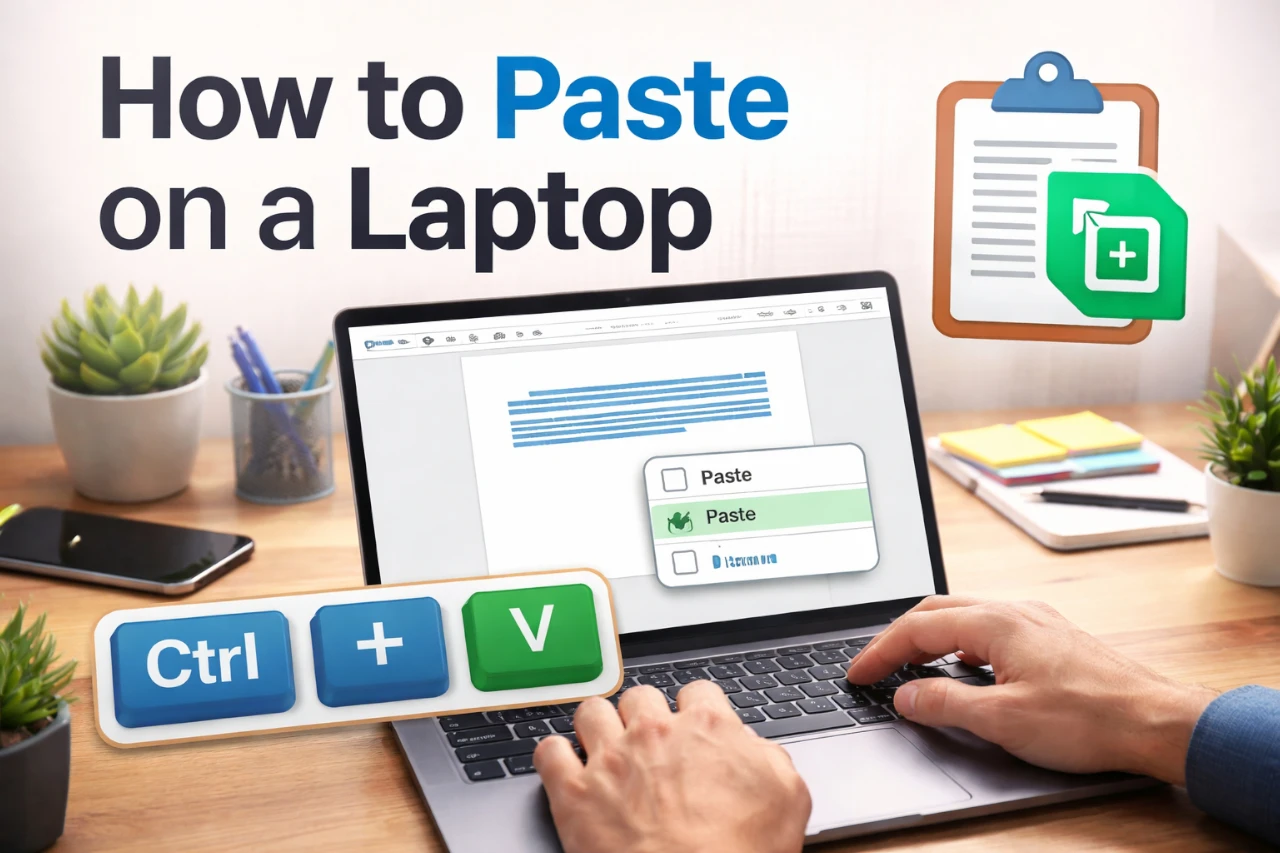
You use paste all the time, but it can fail when shortcuts differ or settings change. Knowing the right way saves time at school, work, or home. A quick fix often makes the difference between smooth progress and frustration.
You paste on a laptop by pressing Ctrl + V on Windows or Command + V on a Mac after you copy text.
You can also right-click or use the touchpad menu to paste. These methods work across most apps and browsers, as shown in guides on how to copy and paste on a laptop.
This article walks you through simple paste methods, common shortcuts, and touchpad options. You also learn how to handle special paste choices and fix problems when paste stops working. Each step focuses on speed, accuracy, and fewer mistakes.
Key Takeaways
- Use keyboard shortcuts to paste fast on any laptop.
- Paste with the mouse or touchpad when shortcuts fail.
- Fix paste issues by checking selection and clipboard behavior.
Understanding Copy and Paste Basics
You use copy and paste to move text or files fast without retyping. This works the same on most laptops, whether you use Windows or macOS, and it depends on how the clipboard stores your data.
What Is the Clipboard?
The clipboard is a temporary storage space in your system memory. When you copy text, images, or files, your laptop saves that item to the clipboard until you replace it with something else.
You can paste the same copied item many times. The clipboard keeps only the most recent item unless you use tools like the Windows clipboard, which can store a short history. If the clipboard is empty, the Paste option stays disabled.
Most laptops use simple shortcuts to work with the clipboard. For example:
| Action | Windows | macOS |
|---|---|---|
| Copy | Ctrl + C | Command + C |
| Paste | Ctrl + V | Command + V |
These basics match the steps explained in guides on how to copy and paste text on a laptop.
Difference Between Copy, Cut, and Paste
Copy and paste duplicates content. The original stays where it is, and the clipboard holds a copy you can reuse. This works best when you need the same text in more than one place.
Cut and paste moves content. Cutting removes the item from its original spot and places it on the clipboard. When you paste, the item appears only in the new location.
You avoid mistakes by choosing the right action. Use copy when you want backups. Use cut when you want to reorganize text or files. Both actions rely on the same clipboard, so copying something new will replace what you cut before.
How to Highlight and Select Content
You need to highlight text or select items before you can paste them somewhere else. Laptops let you do this with a mouse, a touchpad, or just the keyboard. Each method works well if you know when to use it.
Highlighting Text with Mouse
You highlight text by placing the pointer at the start of the text. Press and hold the left mouse button, then drag to the end. Release the button when the text looks selected.
This method works in documents, emails, and web pages. It also helps you copy only the words you need instead of whole paragraphs. If you want to select everything in one window, press Ctrl + A on Windows or Command + A on a Mac, which is explained in this guide on how to highlight or select text on a computer.
If you select too much, click once anywhere else to clear the highlight. Then try again with a slower drag.
Selecting Files or Folders
You select files and folders in File Explorer or Finder before you copy or paste them. Click once on a file to select a single item. Hold Ctrl (Windows) or Command (Mac) and click to select several items that are not next to each other.
To select a group in order, click the first item. Hold Shift, then click the last item. The system highlights everything in between. This approach reduces mistakes when moving or copying many files, as described in this article on copying and pasting on a laptop.
You can also click and drag on empty space to draw a box around multiple files.
Selecting Without a Mouse
You can highlight text using only the keyboard. Place the cursor where you want to start. Hold Shift, then press the arrow keys to extend the selection one character or line at a time.
This method gives you more control when you need precision. It also helps if your touchpad feels jumpy. For full-page or full-field selection, use Ctrl + A or Command + A, which works across most apps in Windows, as shown in this guide on selecting or highlighting text in Windows.
Keyboard selection works well when editing long documents or spreadsheets where accuracy matters.
Keyboard Shortcuts for Pasting
Keyboard shortcuts let you paste text, files, and images fast without using a mouse. You save time, avoid errors, and keep your hands on the keyboard. The exact keys depend on your system and the app you use.
Standard Shortcuts for Windows and Mac
You paste most content with Ctrl + V on Windows and Command (⌘) + V on Mac. These shortcuts work in nearly all apps, browsers, and file managers.
They pair with copy and paste basics:
- Copy: Ctrl + C (Windows) | ⌘ + C (Mac)
- Cut: Ctrl + X (Windows) | ⌘ + X (Mac)
- Paste: Ctrl + V (Windows) | ⌘ + V (Mac)
Windows keeps the original formatting by default. Many apps also support paste without formatting. Windows and macOS handle these actions consistently across apps, which makes them reliable for daily work, as shown in this guide to copy and paste keyboard shortcuts in Windows.
Alternative Keyboard Shortcuts
Some apps offer extra paste options that help you control formatting. On Windows, Ctrl + Shift + V pastes plain text in many browsers and editors. It removes fonts, colors, and links.
Microsoft Word uses Ctrl + Alt + V to open Paste Special. You can choose text only, formatting, or images. This helps when you copy content from websites.
Windows also supports a clipboard history. Press Windows key + V to paste items you copied earlier, not just the last one. You can turn this on in system settings. This feature helps when you copy and paste many items in a row.
Keyboard Shortcuts in Command Line Environments
Command line tools handle how to copy and paste differently. On Windows Command Prompt and PowerShell, you paste with Ctrl + V in modern versions. Older systems may require right-click to paste.
On macOS Terminal and Linux terminals, use ⌘ + V or Ctrl + Shift + V to paste. Plain Ctrl + V often means something else, like scrolling.
Copy also changes:
- macOS/Linux terminals: Copy with ⌘ + C or Ctrl + Shift + C
- Windows terminals: Copy with Ctrl + C after selecting text
These rules vary by terminal app, so check its settings if shortcuts do not work as expected.
Pasting Using the Mouse or Touchpad
You can paste content fast without the keyboard by using tools built into your laptop. These options work well when you copy and paste text, files, or images on Windows or macOS.
Right-Click Context Menu
You can paste using the right-click menu on a mouse or touchpad. After you copy content, move your cursor to the spot where you want it. Right-click, then select Paste from the menu.
On many touchpads, you right-click by tapping with two fingers or pressing the lower-right corner. This method works across most apps and browsers. It also helps when keyboard shortcuts fail. According to Lifewire’s guide on copying and pasting on a laptop, the right-click menu gives the same result as keyboard commands.
Common right-click actions
| Action | Result |
|---|---|
| Copy | Saves the item to the clipboard |
| Paste | Inserts the copied item |
| Cut | Moves the item instead of copying |
This approach works well when you paste on Windows or Mac and want clear control.
Menu Bar Options
Many programs let you paste using the menu bar at the top of the screen. Look for Edit, then click Paste. This option helps when your touchpad gestures feel awkward or inconsistent.
On Windows apps like Word or Notepad, the Edit menu sits near the top-left. On macOS, the menu bar stays at the top of the screen. Techwalla explains that touchpads give easy access to copy and paste tools, even without a mouse, in its article on copy and paste with a touchpad.
Menu options also show when paste is available. If Paste appears dim, the clipboard is empty. That visual cue helps you avoid mistakes.
Special Paste Options and Techniques
Some paste actions help you keep text clean or move files faster. These options reduce formatting problems and save time when you work across apps or folders.
Paste Without Formatting
You use paste without formatting when copied text brings unwanted fonts, colors, or links. This often happens when you copy from a website into a document or email. The goal is to paste plain text only.
On many laptops, you can press Ctrl + Shift + V to paste clean text. This shortcut works in apps like browsers, Google Docs, and some note tools. If it fails, use the app menu or right‑click options described in guides on paste without formatting on Windows.
Common ways to paste plain text
- Keyboard: Ctrl + Shift + V (when supported)
- Menu: Edit → Paste as plain text
- Workaround: Paste into Notepad first, then copy again
Dragging and Dropping to Paste
Dragging and dropping works best for files, folders, and images. You select an item, hold the mouse or trackpad, then move it to a new location. This action pastes the item where you release it.
You control the result with simple keys. Dragging within the same drive usually moves the item. Holding Ctrl while dragging forces a copy instead. This reduces mistakes when organizing files.
Quick control guide
| Action | Result |
|---|---|
| Drag within same folder | Move |
| Drag to another drive | Copy |
| Hold Ctrl while dragging | Copy |
| Hold Shift while dragging | Move |
This method works in File Explorer and on the desktop. It avoids extra menus and speeds up file tasks.
Managing Clipboard History and Multiple Items
You can save time by keeping more than one copied item ready to paste. Windows offers built‑in clipboard history, and third‑party tools can store and organize even more items.
Accessing Clipboard History on Windows
Windows includes clipboard history so you can paste items you copied earlier. Turn it on in Settings > System > Clipboard, then switch Clipboard history to On. Press Windows key + V to open the Windows clipboard and pick an item to paste.
Clipboard history keeps text, links, and small images. It clears on restart unless you pin items.
Key tips
- Pin important items so they stay after a restart.
- Click Clear all to remove old items.
- Clipboard history syncs across devices if you sign in and enable sync.
Microsoft documents limits and steps in its support guide: https://support.microsoft.com/windows/clipboard-history.
Using Clipboard Managers
A clipboard manager adds more control than the built‑in tool. These apps store many items, keep them after restarts, and let you search by keyword. They help when you paste the same blocks of text all day.
Common features you should look for:
- Search and filters to find items fast
- History size controls to avoid clutter
- Shortcuts to paste without leaving your app
Popular options include Ditto (free, open source) and ClipboardFusion (free and paid). Ditto works well on Windows and supports sync: https://ditto-cp.sourceforge.io/. ClipboardFusion adds macros and rules: https://www.clipboardfusion.com/.
Tips for Faster and Safer Pasting

You can paste fast by using the right shortcuts and habits. You also need to clear clipboard data so private text does not linger after you copy it.
Pasting Quickly with Shortcuts
Keyboard shortcuts let you paste fast without breaking focus. Use the standard paste, and learn paste-without-formatting to avoid messy text.
- Windows:
- Paste: Ctrl + V
- Paste without formatting (many apps): Ctrl + Shift + V
- macOS:
- Paste: Cmd + V
- Paste without formatting: Cmd + Shift + V
Some apps add their own options. For example, browsers and editors often support “Paste and match style.” This saves time when moving text between emails, docs, and forms. Microsoft lists common paste options and shortcuts for Windows apps on its support site: https://support.microsoft.com. Apple documents paste commands for macOS here: https://support.apple.com.
Clearing Sensitive Clipboard Data
Your clipboard can hold passwords, codes, or personal notes. Clear clipboard data after you paste anything sensitive, especially on shared or work laptops.
- Windows 10/11:
- Open Settings > System > Clipboard
- Select Clear clipboard
- macOS:
- Copy harmless text to replace the old item, or restart to empty the clipboard
Windows can also keep a clipboard history, which increases risk if left on. You can turn it off in the same Clipboard settings. Microsoft explains clipboard history and clearing steps here: https://support.microsoft.com. Apple notes how the clipboard works and why copied items persist until replaced: https://support.apple.com. Clearing the clipboard reduces accidental leaks and keeps your data under control.
Troubleshooting Pasting Issues
Pasting can fail because of app bugs, clipboard conflicts, or system problems. You can spot the cause by watching what fails and fixing it step by step.
Common Pasting Errors
You press Ctrl + V and nothing happens. Often, only one app fails, while others paste fine. That points to an app bug, not your laptop.
You paste the wrong item or an old clip. Clipboard history can fill up or clash with other tools that manage copying. Windows clipboard issues show up more on long work sessions, as noted in this guide on copy and paste not working in Windows 10/11.
Hardware can also block pasting. A stuck Ctrl key or a faulty touchpad can break shortcuts.
Quick checks
- Try pasting with right‑click > Paste
- Paste into a simple app like Notepad
- Test Ctrl + C and Ctrl + X to see if all shortcuts fail
Solutions for Frequent Problems
Start with the fastest fixes. Close and reopen the app that will not paste. If that fails, restart Windows Explorer from Task Manager.
Clear the clipboard to remove conflicts. This helps when paste inserts the wrong text. Lifewire confirms clipboard conflicts as a common cause of paste failures.
Use this order to save time:
| Step | What to Do | Why It Helps |
|---|---|---|
| 1 | Restart the app | Clears app bugs |
| 2 | Clear clipboard | Fixes conflicts |
| 3 | Restart Explorer | Resets system UI |
| 4 | Install updates | Fixes known bugs |
If problems continue, scan for malware and update drivers. Driver issues can block keyboard input, as explained in this breakdown of copy‑paste fixes for Windows laptops.
Final Thoughts
You now know how to paste on a laptop using simple steps that work across most apps. You copy text or files, move your cursor, and paste where you need them. This habit saves time and reduces errors when you work or study.
Keyboard shortcuts give you the fastest results. You can also use right‑click menus when shortcuts fail or when you use a touchpad. The steps stay the same on most systems, as shown in this guide to copying and pasting on laptops and desktops.
Common paste shortcuts by system
| Device | Paste |
|---|---|
| Windows or Linux laptop | Ctrl + V |
| macOS laptop | Command + V |
A few checks help you avoid mistakes. Make sure you copied something first, or Paste will stay gray. Place the cursor where you want the content to land. If formatting looks wrong, try pasting into a plain text field, then move it again.
These basics cover most daily tasks. When you practice them, pasting becomes automatic and reliable.