
Autel MaxiCharger Review: Who It’s Best For (and Who Should Skip)
A premium Level 2 charger with one of the best apps I’ve used—excellent for tracking, scheduling, and dialing in safe charging power at home.
- Best for: EV owners who want a fast, reliable app + detailed home charging tracking.
- Highlights: adjustable amperage, scheduling for off-peak rates, and a premium look/feel.
- Trade-offs: heavier body, premium pricing, and installation planning matters for higher power.
Home EV chargers are one of those purchases that feel “simple” until you start comparing them. On paper, a lot of Level 2 chargers look similar—until you factor in installation reality, app reliability, power flexibility, and what it’s like to live with the charger every day.
I ended up choosing the Autel MaxiCharger Level 2 EV Charger because I wanted three things to be unquestionably good: installation experience, software/app experience, and power flexibility that I could confidently match to my home’s electrical setup. I also cared about support—because if a charger ever becomes unreliable, it’s not just annoying, it can disrupt your entire routine.
After using it, my overall impression is very clear: it’s one of the best all-around home chargers I’ve used and researched, especially if you value a strong app, adjustable charging current, and a smooth setup experience.
Quick Verdict
Verdict: The Autel MaxiCharger is best for EV owners who want a premium, app-driven Level 2 charger with flexible power settings and standout support—not ideal if you want a lightweight, “set-and-forget” budget charger or you don’t want to deal with hardwiring and electrical planning.
Best for:
- People who care about a fast, responsive app with detailed home-charging tracking
- Homes that want adjustable amperage to match the breaker/circuit safely
- Buyers who value responsive U.S.-based customer support when something needs attention
Not ideal for:
- Anyone who wants the lightest, simplest charger to mount and manage
- Buyers who don’t want to think about electrical capacity, circuit sizing, or electrician work
- People who prefer a charger with minimal software involvement (or who dislike cloud/app dependence)
Biggest real-world benefit: The app experience and control (configuration, monitoring, scheduling, cost tracking) makes daily charging feel organized and predictable.
Main trade-off you must accept: It’s a more premium, heavier, more “feature” charger—meaning you’re paying for software + power capability, and installation planning matters.
At a Glance
- Category: Level 2 home EV charger (J1772)
- Price range: Premium
- Key feature: Adjustable current + robust app monitoring/scheduling
- Best use case: Reliable overnight charging with clear tracking and off-peak scheduling
- Cable length: 25 ft (as listed)
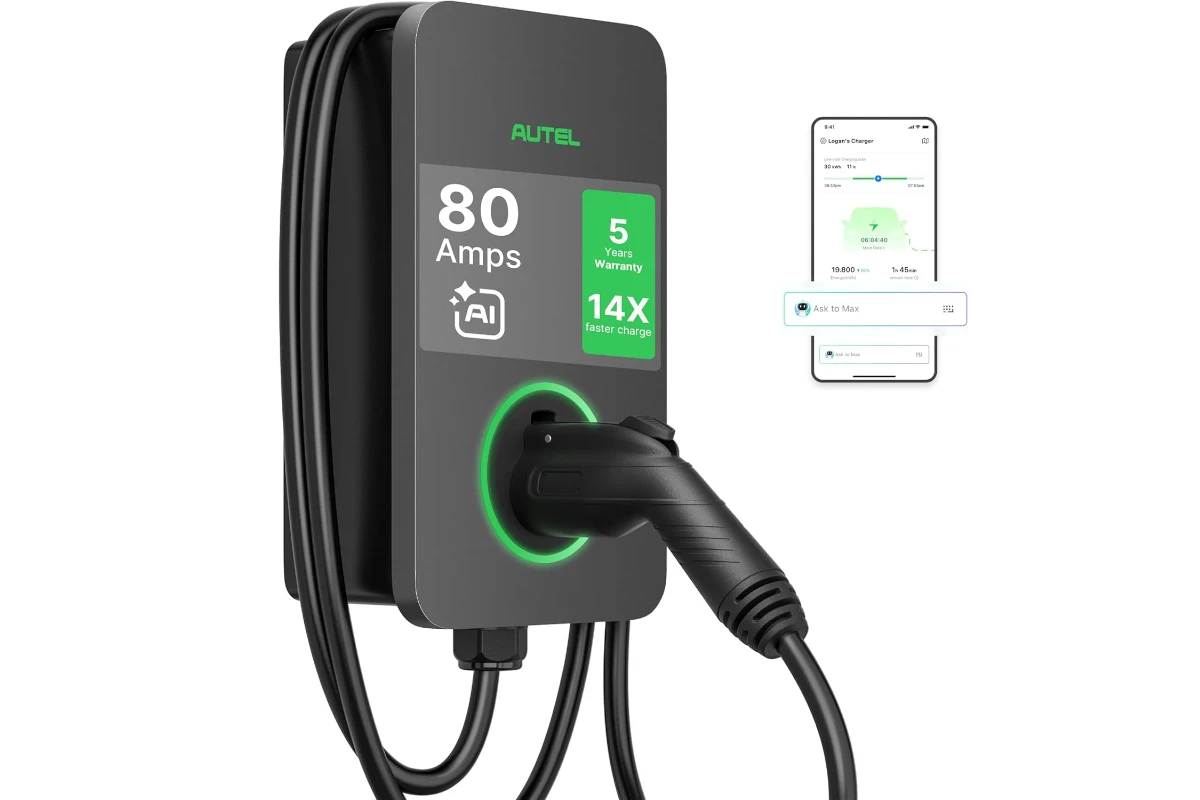
- Max output: Up to 80A / 19.2 kW (as listed; requires appropriate circuit)
Test conditions
- Usage scenario: Home charging, daily/weekly routine, monitoring, scheduling around electricity rates
- Duration tested: Long enough to evaluate setup, daily usability, and app reliability (real-world routine testing)
What Is the Autel MaxiCharger EV Charger?
The Autel MaxiCharger is a Level 2 EV charging station designed for home (and potentially light commercial) use. It’s built around two ideas:
- High power capability (up to 80A in the hardwired configuration, per the listing), so you can future-proof for bigger-battery EVs or higher-demand households.
- A software-first experience, where the app isn’t an afterthought—it’s part of how you configure amperage, schedule charging, and track energy/cost.
In practice, it’s meant to solve a real problem most EV owners run into after the first few weeks: “I don’t just want my car charged—I want charging to be effortless, trackable, and predictable.”
Real-World Performance
Charging speed in daily life
Let’s be practical: most people don’t need “maximum possible amps” every day. What matters is whether the charger reliably gets you back to your target charge level overnight—and whether it does it without drama.
In my usage, the MaxiCharger delivered the kind of consistency I want from a home charger: plug in, it starts correctly, tracking looks right, and scheduling behaves the way I expect. The most important performance feature for me wasn’t just the top-end power—it was the fact that I could set charging current to match my home setup and still get strong overnight charging.
Autel’s listing claims up to 80A / 19.2 kW and even marketing claims like “70 miles in 1 hour,” but I treat those as best-case outputs that depend heavily on your vehicle and your electrical installation. What I can confidently say from real use is: it charges fast enough to eliminate charging anxiety, and it does so in a controlled, configurable way.
The “it just works” factor
Where this charger impressed me most was the everyday feel:
- The charging sessions were easy to start and monitor.
- The charger behaved consistently when I set rules (like scheduling).
- The app stayed responsive and didn’t feel like a buggy “bonus feature.”
That last point matters more than people think. A charger can be electrically solid, but if the app is slow or unreliable, you’ll stop using the “smart” features entirely. Here, the smart features felt usable.
Scheduling and cost tracking (where it actually pays off)
One feature I genuinely enjoyed was the ability to schedule charging during off-peak hours and enter electricity costs so I could see what charging was costing and what timing changes might save. It sounds small, but it changes your relationship with charging: you stop guessing, and you start managing.
If your utility plan has meaningful time-of-use pricing, this becomes a real-world value feature—not a gimmick.
Build Quality & Durability
Physical build and finish
The unit looks sleek and modern, and it doesn’t feel cheap in hand. It has that “premium wall hardware” vibe that makes it look intentional in a garage or on an exterior wall.
That said, one drawback I’ll be direct about: it’s heavier than some other home chargers. That’s not a dealbreaker, but it does affect mounting and installation comfort. If you’re installing solo, weight becomes a real consideration.
Cable feel and everyday handling
A 25-foot cable is the right length for most garages and driveways, but cable handling is where chargers differ in real life. The MaxiCharger cable felt durable and substantial—good for confidence, less ideal if you want the most flexible, lightweight coil. In colder climates, thicker cables can also feel stiffer (this is not unique to Autel, but it’s worth knowing).
Reliability posture
Autel’s product positioning emphasizes reliability features like monitoring and materials. I can’t validate lifespan claims from short-term use, but what I can say is that it felt like a serious device built for repeated daily charging.
Ease of Use & Setup
Installation experience
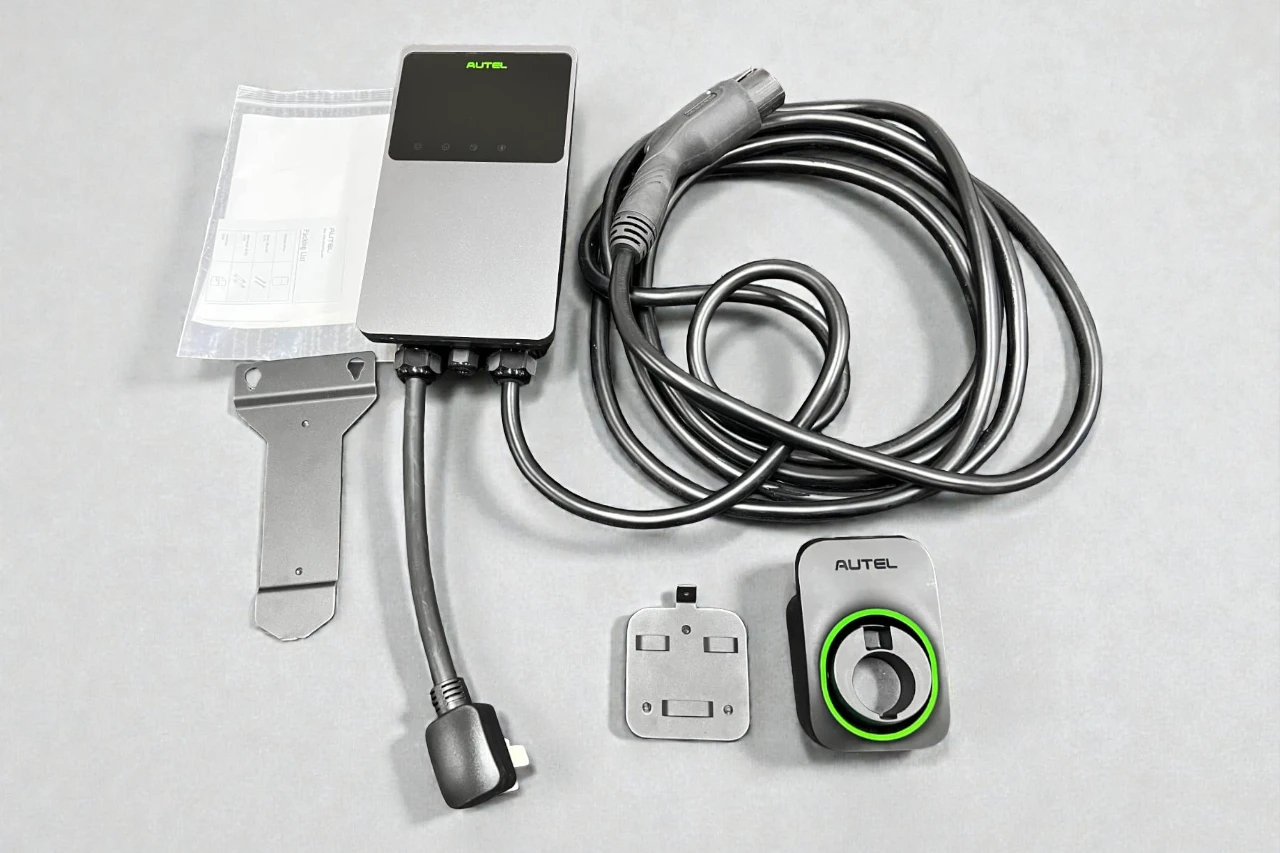
Installation is often the make-or-break moment for home EV chargers. I was happy that the unit arrived largely pre-assembled, and the overall installation felt straightforward with a minimal parts “puzzle.”
In my case, I already had an existing 240V setup available, which made installation much faster. Practically, this meant less wall work and less complexity. If you’re starting from scratch with no 240V circuit, your experience will depend more on your electrician and panel capacity than on the charger itself.
One important reality: “80A” is not plug-and-play
Here’s a key buyer reality: the hardwired 80A capability is real (per the listing), but it’s only usable if your home electrical system is designed for it. Many homes will not run 80A charging without planning (and possibly panel considerations).
The good news is: you can set the charger’s amperage. That flexibility is exactly what I liked. I’d rather own a charger that can scale up in the future but run safely today at a level my electrical setup supports.
App onboarding and configuration
This is one of the strongest parts of the entire experience.
The Autel app made it easy to:
- Configure charging settings and current
- Set up scheduling
- Add vehicle context (make/model)
- Track charging sessions and energy use
The app felt quick and responsive, and I didn’t feel like I had to fight it to get basic tasks done. For a “smart” EV charger, that’s a bigger win than it sounds.
Who This Product Is For
This charger is a strong fit if you see home charging as a system you want to manage—not just a cord you plug in.
You should seriously consider the Autel MaxiCharger if:
- You want a premium app experience that you’ll actually use (not just tolerate)
- You need amperage flexibility to match your home circuit safely
- You care about tracking, including cost visibility and time-of-use scheduling
- You value strong customer support, especially if reliability matters to your daily routine
- You want a charger that can future-proof as your EV needs grow
Who Should Skip This Product
Even though I like it, it’s not the right fit for everyone.
Skip it if:
- You want a cheaper “basic” charger and don’t care about app features
- You dislike the idea of cloud/app dependency for features like scheduling and tracking
- You want the lightest, simplest unit to mount and manage
- Your install situation is complicated and you’re not prepared to plan circuit capacity
- You strongly prefer a native NACS connector without using an adapter (this is J1772)
If you’re in the “I just want something simple and reliable with no fuss” camp, you may be happier with a more barebones model.
Pros & Cons
Pros:
- Excellent app experience: fast, responsive, and actually useful day-to-day
- Flexible current settings: easy to match charging speed to your electrical setup
- Strong daily usability: monitoring and scheduling feel practical, not gimmicky
- Support experience stood out: quick, responsive customer service in my interactions
- Sleek, premium look: feels like a “real” home charging appliance
Cons:
- Heavier than many competitors: mounting and install feel more demanding
- Premium price positioning: you’re paying for features and capability, not just charging
- Electrical planning matters: full power potential may require a more robust circuit/panel
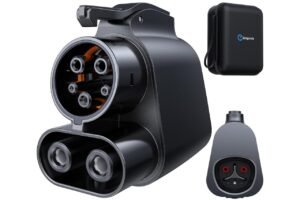
- J1772 setup means Tesla needs an adapter (if you drive a Tesla and don’t already have one)
Comparison to Alternatives
I’ll keep this practical—what changes your ownership experience.
ChargePoint Home Flex
- Typically strong brand recognition and app ecosystem
- Often priced similarly at the premium end
- My take: Autel’s app and configuration experience felt more “fast and modern” in daily use, while ChargePoint’s advantage is widespread familiarity and ecosystem presence.
Emporia Level 2 Charger
- Usually a value-focused pick with strong energy monitoring reputation
- My take: a great option if you care about home energy integration, but Autel felt more “premium appliance” in build/software polish.
Wallbox Pulsar Plus
- Compact design and a strong smart-charging angle
- My take: if you prioritize compact size and a cleaner wall footprint, Wallbox can be attractive. Autel wins on my personal preference for app responsiveness and overall “finished” experience.
Grizzl-E (more rugged/simple style)
- Often chosen for simplicity and durability vibes
- My take: if you want fewer smart features and a more utilitarian charger, that style can be appealing. Autel is better for people who actually want smart scheduling, tracking, and config control.
FAQ
Is the Autel MaxiCharger compatible with my EV?
If your car uses J1772 (most non-Tesla EVs in North America), yes. Tesla owners can charge with a compatible adapter.
Do I need an electrician?
For a hardwired install, yes—professionally installed is the sensible approach. Even with an existing circuit, correct wiring and breaker sizing matter.
Can I reduce the charging amperage?
Yes—this is one of the best practical features. You can match the charging current to what your home circuit supports.
Does Wi-Fi matter?
If you want scheduling, tracking, alerts, and app control, connectivity matters. If you plan to use it as a “dumb” charger, you’ll miss a big part of what you’re paying for.
Can I schedule charging for off-peak rates?
Yes. This is one of the most useful real-world features if your utility plan changes pricing by time of day.
Is it safe for outdoor installation?
It’s marketed as indoor/outdoor capable. Real-world safety still depends on correct installation, sealing, and following electrical code.
Final Verdict – Should You Buy It?
Score: 9.2 / 10
The Autel MaxiCharger is a premium Level 2 charger that feels like it was designed by people who understand daily EV ownership. The app experience is genuinely good, the amperage flexibility is practical for real homes, and my customer service experience was excellent.
That said, it’s not “perfect for everyone.” It’s heavier, it costs more than basic chargers, and full power capability requires real electrical planning. But if you’re the kind of buyer who wants your home charging to be smooth, trackable, and configurable—this is a charger you can feel confident installing and living with.
Best-fit users: App-first owners, TOU rate optimizers, households that want flexible charging power, buyers who value strong support.
Who should skip: Budget-only shoppers, people who hate apps/cloud features, anyone wanting the lightest/most minimal wall unit.
Value summary: Pricey, but the daily experience and control can absolutely justify it for the right buyer.
| Preview | Product | Price | |
|---|---|---|---|

| Autel MaxiCharger Level 2 Electric Vehicle (EV) Charger, up to 80 Amp Fast Charging EV Charger Level… |
$1,299.00
$1,069.00 | View on Amazon |