
Meta Quest 3S VR Headset — Gorilla Tag Bundle (128GB)
Our take: a powerful standalone VR and mixed reality headset that doubles graphics, adds Gorilla Tag perks and still stays under $300.
- 2x graphical processing power with Snapdragon XR2 Gen 2 for smooth, sharp VR worlds.
- Exclusive Gorilla Tag Cardboard Hero items plus 1,000 shiny rocks in this Amazon bundle.
- Wireless mixed reality with full-color passthrough, 2.5-hour battery and 3 months of free games.
- Processor
- Snapdragon XR2 Gen 2
- Memory
- 8GB RAM
- Storage
- 128GB
- Battery Life
- 2–2.5 hours playtime
If you’ve been waiting for the moment when standalone VR finally becomes powerful, affordable and genuinely family-friendly, the Meta Quest 3S is basically that moment in a box.
Priced at $299.99 for the 128GB model, the headset slots in as Meta’s “sweet-spot” device between the aging Quest 2 and the more premium Quest 3. It uses the same Snapdragon XR2 Gen 2 chip as the Quest 3, doubles the graphical performance over the older generation, and bumps memory up to 8GB of RAM (around 33% more than Quest 2).
The Amazon-exclusive Gorilla Tag Cardboard Hero bundle goes a step further, throwing in unique cosmetic items plus 1,000 shiny rocks for Gorilla Tag—worth about $45 of in-game value—on top of three months of Meta Horizon+ game access.
This review will walk through real-world strengths and weaknesses of the Meta Quest 3S, with a special focus on the Gorilla Tag bundle, so you can clearly decide whether this is the right VR headset for your home.
Quick Verdict
The Meta Quest 3S is the best value mainstream VR headset right now if you:
- Want true wireless VR with no PC, base stations or cables.
- Care about mixed reality (seeing your room in color and blending virtual objects into it).
- Are buying for kids/teens or first-time VR users who just want to play Gorilla Tag, Beat Saber-style games, fitness titles and casual experiences.
- Prefer to stay under the $300 mark but still get modern hardware.
It’s not perfect. The fresnel lenses mean image clarity and edge sharpness are below the more expensive Quest 3, and advanced sim fans might still prefer PC-tethered headsets. But considering performance, features and the game bundle, it’s a remarkably strong entry point into VR in 2026.
Meta Quest 3S at a Glance
Key Specs (128GB Gorilla Tag Bundle)
- Display: LCD, 1832 x 1920 pixels per eye, 90–120 Hz refresh rate
- Processor: Qualcomm Snapdragon XR2 Gen 2
- RAM: 8GB LPDDR5 (33% more than Quest 2)
- Storage: 128GB (also available as 256GB at a higher price)
- Optics: Fresnel lenses
- Cameras: Dual 4MP RGB color cameras + IR cameras for tracking and passthrough
- Tracking: Inside-out, 6-DoF, no external sensors
- Connectivity: Wi-Fi 6E, Bluetooth 5.2
- Weight: ~514 g (about 1.14 lb)
- Battery life: Typically 2–2.5 hours of active gameplay
- Included in this bundle:
- Headset
- Touch controllers and straps
- Head strap
- USB-C cable & AC adapter
- Gorilla Tag Cardboard Hero Bundle (exclusive cosmetics + 1,000 shiny rocks)
- 3-month Meta Horizon+ trial with 40+ rotating games
Design & Comfort
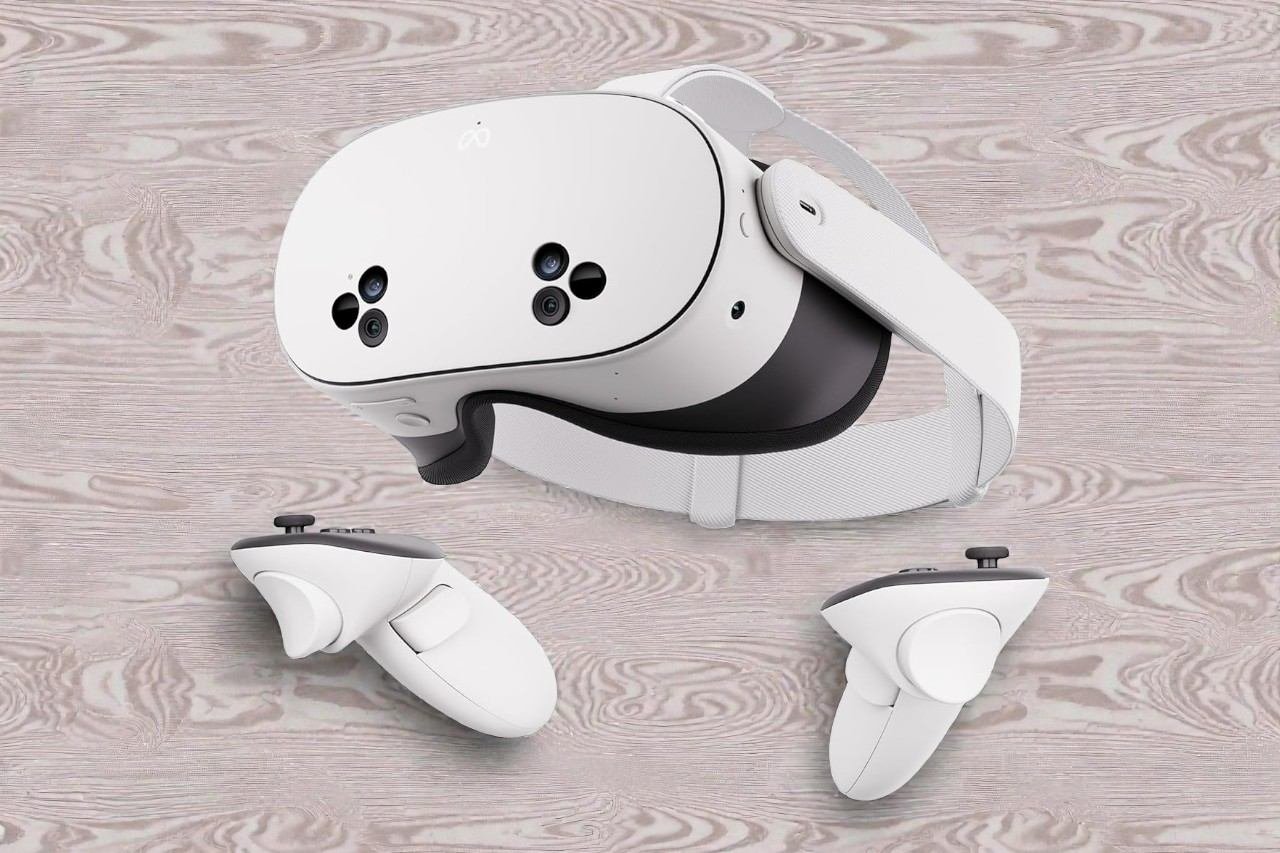
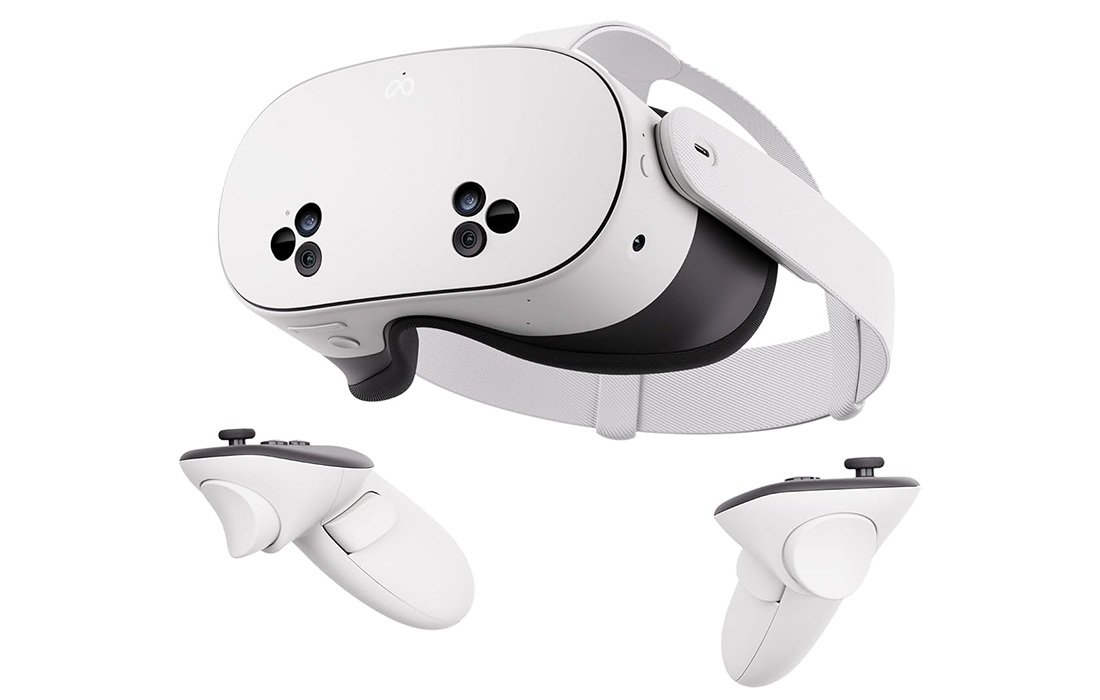
Visually, the Quest 3S looks like a softer, more approachable cousin to the Quest 3. The front plate is smooth and rounded with four camera “eyes” that give it a friendly, robot-like expression rather than a piece of intimidating tech.
Build and materials
The shell is mostly matte white plastic with soft-touch accents around the face gasket. Everything feels solid but clearly tuned for light weight over premium metal. That’s the right choice for VR: less weight means less fatigue during long play sessions.
At around 514 grams, the 3S is in the same ballpark as the Quest 3 and noticeably lighter than many PC VR headsets. You can feel that as soon as you put it on—most users will be able to play through an entire movie, game session or workout without neck strain.
Head strap and fit
Out of the box you get the standard fabric strap. It’s simple but functional:
- Top and side straps use Velcro for quick adjustment.
- The rear pad spreads weight across the back of your head, which helps with comfort.
- Glasses wearers can usually fit the headset over smaller frames, though very wide glasses may feel cramped.
For intense Gorilla Tag sessions or long workout games, you might eventually want a third-party rigid or battery strap, but the stock strap is perfectly fine for casual play and for kids.
Face gasket and comfort over time
The facial interface is soft and reasonably breathable. Like other Meta headsets, it will warm up around your eyes during active games, but there are no hard edges digging into your nose or cheeks. The nose gap is also small enough to block most external light, which keeps immersion strong.
Overall, the comfort level is exactly where it needs to be for an entry-level headset: good enough for multi-hour use and easy to share between family members.
Visual Experience: Display & Lenses
This is where the Quest 3S balances cost and performance carefully.
Resolution and refresh rate
The panel delivers 1832 x 1920 pixels per eye, which is a substantial step up from Quest 2 and matches or beats many other similarly priced headsets. Text in menus, HUD elements and subtitles is crisp, and distant objects in games look reasonably detailed.
Refresh rates up to 120 Hz make movement feel smooth and help cut down on motion sickness for sensitive players, especially in fast games like Gorilla Tag or rhythm titles.
Fresnel lenses vs. pancake optics
To keep the price at $299, Meta uses fresnel lenses, similar to the Quest 2, instead of the slim pancake lenses found in the Quest 3.
What this means in practice:
- Center clarity is excellent—the “sweet spot” is sharp and satisfying.
- At the edges you may notice some blur and light streaks (“god rays”), especially against high-contrast scenes like white text on black backgrounds.
- The headset is a little bulkier than the Quest 3, but still very manageable.
If you’re coming from high-end PC VR or the Quest 3, you’ll see the difference in edge clarity. If this is your first headset, you’ll mostly just notice that VR looks surprisingly sharp.
IPD adjustment
Like other recent Meta headsets, there’s support for interpupillary distance (IPD) adjustment in software, letting you tune the image to your eyes. It’s not the mechanical slider some enthusiasts prefer, but it works well enough to get a comfortable, clear image for most users in the supported range.
Performance: Snapdragon XR2 Gen 2 Power
Under the hood, the Quest 3S is powered by the Qualcomm Snapdragon XR2 Gen 2 chip—the same generation silicon inside the more expensive Quest 3.
2x graphical processing power
Compared to the original XR2 used in Quest 2, the XR2 Gen 2 offers roughly double the graphical processing performance, with faster CPU cores and a much more capable GPU. In real games, that translates to:
- Faster load times for big titles.
- Higher resolution rendering and more complex scenes.
- Smoother frame rates, even when the scene is full of dynamic objects.
Combined with 8GB of RAM, the headset feels snappy when switching between apps, loading larger environments or mixing AR elements into your room.
Tracking and controllers
The Quest 3S uses Meta’s familiar inside-out tracking with cameras on the front of the headset. No base stations required:
- 6-DoF tracking lets you walk, crouch and dodge naturally.
- Controllers are the standard Meta Touch Plus controllers, with analog sticks, triggers and capacitive buttons that feel very familiar if you’ve ever used a Quest before.
- Tracking is solid even in living rooms with basic lighting, though very dark rooms or bright direct sunlight can still throw off any inside-out system.
Hand tracking is supported as well. It’s not yet a full replacement for controllers in fast-paced games, but it’s great for casual apps, browsing, watching movies or just showing off VR to friends without fitting them with controllers.
Mixed Reality & Passthrough
One of the main reasons to choose a Quest 3S over older headsets is mixed reality—the ability to see your real room in color while digital objects are layered into it.
Dual RGB color cameras
The 3S is equipped with two 4MP RGB cameras for passthrough plus additional IR sensors for depth and tracking.
Compared to grayscale passthrough on Quest 2:
- You now see your room in full color, which is much more natural.
- Text on your phone, keyboard and monitor is readable at a glance.
- You get a better sense of depth, which helps when moving around furniture or playing mixed-reality games that use your walls and floor.
It’s not as razor-sharp as looking with your naked eyes, but it’s good enough that you’ll feel comfortable walking around your play area and interacting with physical objects.
Mixed-reality experiences
With this hardware, you can:
- Draw virtual boundaries on your floor and see them persist in your real room.
- Spawn portals, enemies or puzzles on your walls and tables.
- Play Gorilla Tag or other titles in AR-style modes that blend environments.
Mixed reality is still a young category, but the Quest 3S gives you a front-row seat without the cost of a high-end headset.
Gorilla Tag Cardboard Hero Bundle: What You Actually Get
For many buyers—especially kids and teens—the Gorilla Tag Amazon bundle is the star of the show.
Gorilla Tag itself has become a cultural phenomenon in VR, known for using pure arm movement instead of thumbsticks: you swing your arms to climb, run and launch yourself around maps. It’s both silly and surprisingly intense as a workout.
Cardboard Hero cosmetics and shiny rocks
The Cardboard Hero Bundle adds a set of exclusive in-game items:
- Handiwork Helmet (cardboard-themed headgear)
- Handiwork Armor (matching body armor)
- 1,000 shiny rocks (the game’s premium currency)
Together those bonuses are worth about $45 if purchased separately.
For younger players who care a lot about cosmetics and standing out in lobbies, this is a big deal. Instead of just getting “another game code,” they start with rare items that instantly differentiate their avatar.
Why this matters for first-time VR owners
A common downside of buying a new VR headset is realizing you still have to spend extra on games. Here, the Gorilla Tag goodies plus the three-month Meta Horizon+ trial mean you can:
- Jump straight into an ultra-popular multiplayer game with exclusive gear.
- Try dozens of other titles before deciding which ones are worth buying long-term.
For parents or gift-givers, that’s peace of mind: the headset feels “complete” straight out of the box.
Game Library & Meta Horizon+
The Meta Quest platform is currently the largest standalone VR ecosystem, and the Quest 3S supports the same store as the Quest 3.
3 months of Meta Horizon+
With this headset you get a 3-month trial of Meta Horizon+, which essentially acts like a game subscription.
During the trial you can:
- Access a rotating catalog of 40+ VR games and apps.
- Discover genres you didn’t expect to like, from puzzle games to shooters to cozy social hangouts.
- Build a library of titles with discounts and occasional permanent unlocks.
For new VR users, this is invaluable. Rather than gambling on which two or three games to buy first, you can treat the first months as a buffet.
Native games and streaming options
Beyond Horizon+, the Quest Store includes virtually every major standalone VR hit:
- Fitness games like Supernatural-style workouts, boxing and rhythm titles.
- Narrative adventures, puzzle experiences, and atmospheric exploration games.
- Social spaces, concert experiences and productivity tools.
You can also stream PC VR titles (via Meta’s Link/Air Link or third-party apps) over Wi-Fi, turning the Quest 3S into a wireless PC VR display for games on SteamVR or the Rift store, as long as your network is strong enough.
Audio & Immersion
Meta’s built-in spatial audio speakers sit in the strap arms above your ears. They’re surprisingly loud and clear for open-air drivers:
- Dialog and sound effects in games are crisp.
- Positional audio makes it easier to track footsteps, gunshots or approaching enemies.
- Because the speakers don’t seal your ears, you stay aware of your real-world surroundings, which is excellent for parents and shared spaces.
For deeper immersion or late-night sessions, you can pair Bluetooth earbuds or wired USB-C headphones. Latency with Bluetooth is acceptable for most content, though rhythm-game perfectionists may still prefer wired audio or specialized low-latency earbuds.
Battery Life & Charging
Meta advertises “2+ hours of battery life”, and that’s realistically what you’ll see in everyday use: around 2–2.5 hours of active gaming on a full charge, depending on brightness, refresh rate and the demands of the specific game.
For more casual use (watching videos, browsing, mixed short sessions) you may stretch closer to 3 hours.
Charging is handled via the included USB-C cable and AC adapter. Going from low to full typically takes around 2–2.5 hours. If you expect marathon sessions, an optional battery head strap or external power bank plugged into the USB-C port can effectively double play time.
Software Experience, Setup & Safety
Simple setup
Setting up the Quest 3S is straightforward:
- Create or log into your Meta account.
- Pair the headset with your phone using the Meta mobile app.
- Follow the guided room-scale setup to define your play area.
- Redeem the Gorilla Tag bundle and Horizon+ trial (usually surfaced automatically during onboarding).
The whole process usually takes 15–20 minutes and doesn’t require a PC.
Meta Horizon OS
The headset runs Meta Horizon OS, a VR-focused version of Android. The interface has been steadily refined:
- A clean home dashboard with quick access to your library, store and social features.
- Integrated system menus while in games (for adjusting guardian boundaries, recording clips, etc.).
- Native casting to a TV or phone so friends can watch what the player is seeing.
Privacy and parental controls
For families, safety matters as much as performance. Meta includes a growing suite of parental supervision tools:
- Restricted access to mature-rated titles.
- Time-limit and app-usage monitoring via the parent’s phone.
- Control over who can interact with the child’s account in social apps.
Combined with the open-ear speakers (so you can hear what’s going on) and visible guardian boundaries, the Quest 3S is one of the more family-friendly VR setups currently available.
Meta Quest 3S vs Quest 3 vs Quest 2
If you’re shopping in late 2025, you’re probably deciding between these three.
Quest 3S vs Quest 2
- Power: 3S has XR2 Gen 2 + 8GB RAM, versus XR2 + 6GB on Quest 2—a big performance uplift.
- Visuals: Higher resolution per eye and full-color passthrough on 3S vs. lower resolution and grainy monochrome passthrough on Quest 2.
- Mixed reality: 3S supports modern mixed-reality experiences; Quest 2 is mostly pure VR.
If you can still find a Quest 2 heavily discounted it might seem tempting, but the 3S is simply a much more future-proof headset for mixed reality and upcoming games.
Quest 3S vs Quest 3
The comparison with Quest 3 is more nuanced:
- Same chip, same RAM — both use XR2 Gen 2 and 8GB memory.
- Quest 3 has higher-resolution panels and pancake lenses, giving it better edge clarity and slightly more compact optics.
- Quest 3S costs significantly less (especially in this Amazon bundle) and usually includes Gorilla Tag content plus Horizon+ time.
If you’re a videophile or sim enthusiast and can afford the extra cost, the Quest 3 still offers the best visual experience in Meta’s consumer lineup. But if you mainly want accessible VR and mixed reality for the lowest reasonable price, the Quest 3S is the smarter value play.
Who Is the Meta Quest 3S For?
The 3S hits a sweet spot for several groups:
1. First-time VR buyers
If you’ve never owned a VR headset, you want something:
- Easy to set up
- Comfortable to wear
- With plenty of games right away
The Quest 3S delivers all of that while keeping the price under $300 and cutting out the need for a gaming PC.
2. Families and younger players
For kids and teens, the Gorilla Tag bundle is almost tailor-made:
- They get exclusive in-game items and shiny rocks from day one.
- The open-ear audio and parental controls make supervision less stressful.
- Mixed reality helps them stay aware of their actual room while playing.
Just remember to set up guardian boundaries carefully and enforce regular breaks—Gorilla Tag in particular is a real workout.
3. Fitness and casual gamers
The cordless design and 2+ hours of battery life make it great for:
- Daily boxing or rhythm-game workouts
- Short but intense movement sessions
- Casual explorations, puzzle games and social hangouts
If you plan to do multi-hour fitness marathons, pair it with a battery strap for extra comfort and uptime.
4. Budget-conscious enthusiasts
If you’re already into VR but want a wireless, all-in-one headset without abandoning your PC VR library, the 3S offers a powerful mobile platform that can still act as a wireless SteamVR viewer when needed.
Pros & Cons
Pros
- Excellent value at the $299.99 price point, especially with Gorilla Tag bundle and Horizon+ trial.
- Modern XR2 Gen 2 performance and 8GB RAM—fast, responsive, and ready for future games.
- Full-color mixed-reality passthrough with dual RGB cameras.
- True standalone, wireless design—no PC or external sensors needed.
- Solid comfort and light weight for long sessions.
- Massive game library plus three months of Horizon+ for easy discovery.
- Strong ecosystem of accessories and third-party straps/battery packs.
Cons
- Fresnel lenses mean more edge blur and light streaks than the Quest 3’s pancake optics.
- 2–2.5 hours of battery life is decent but not amazing for marathon players.
- 128GB storage can fill up quickly if you install many large games (though you can delete and re-download).
- Passthrough is good but still not “real-world perfect”—text and fine details can look slightly fuzzy.
- No DisplayPort or HDMI input, so PC VR relies on Wi-Fi quality or USB-C streaming.
Final Verdict: Should You Buy the Meta Quest 3S?
The Meta Quest 3S 128GB Gorilla Tag Cardboard Hero bundle is one of the easiest VR purchases to recommend right now.
For around $299.99, you’re getting:
- A properly modern VR/mixed-reality headset with double the graphics performance of the old generation.
- A sharp, responsive display that makes games and apps look genuinely immersive.
- Exclusive Gorilla Tag cosmetics and currency that instantly add value for younger players and fans.
- Three months of Horizon+, so you can sample dozens of games without worrying about what to buy first.
You are sacrificing some optical sophistication compared to the more expensive Quest 3, and the built-in battery won’t carry you through an entire day of play on its own. But for the majority of people looking for their first headset—or upgrading from a Quest 2 without spending premium money—the Quest 3S hits a near-perfect balance.
If your priority is maximum value, casual fun, mixed reality and an instant library of games, the Meta Quest 3S 128GB Gorilla Tag bundle is an outstanding choice and arguably the best entry-level VR headset you can buy right now.
| Preview | Product | Price | |
|---|---|---|---|

| Meta Quest 3S 128GB | VR Headset — Thirty-Three Percent More Memory — 2X Graphical Processing... |
$348.99 | View on Amazon |