
If you want one laptop that can handle emails, spreadsheets, Zoom calls, light photo work, and casual streaming at home, the smartest move is to prioritize a modern CPU, enough RAM (ideally 16GB+), and a decent IPS display.
In this guide, I ranked the laptops you provided based on real-world “daily driver” value: speed for office apps, multitasking headroom, screen usability, and long-term frustration risk.
Quick Verdict
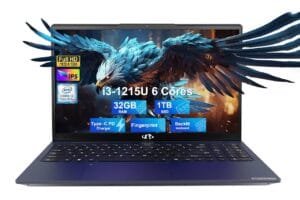
Best overall: Dell Vostro 3530 — the strongest “work + home” balance here thanks to a newer Core CPU, lots of RAM, and a big 1TB SSD.
Best value: ASUS Vivobook Go 15 (Ryzen 3 7320U) — the best mix of snappy everyday performance and price, as long as you’re okay with 8GB RAM.
Who should buy from this list: people doing office work, web apps, homework, Zoom/Teams, and streaming.
Who should look elsewhere: anyone doing heavy video editing, CAD, serious gaming, or needing a bright/color-accurate display outdoors.
Top Picks at a Glance
| Rank | Laptop | Best for | Key strength | Main drawback |
|---|---|---|---|---|
| 1 | Dell Vostro 3530 | Work + multitasking without lag | Newer Core CPU + 32GB RAM + 1TB SSD | Price is higher; screen brightness is typical budget-level |
| 2 | ASUS Vivobook Go 15 | Everyday work + home on a budget | Ryzen 3 7320U feels quick for basics | 8GB RAM limits long-term multitasking |
| 3 | HP G9 (N4120) | Basic office + lots of browser tabs (RAM helps) | 16GB RAM at a low price | Celeron-class CPU is the bottleneck |
| 4 | Lenovo V15 G2 (N4500) | Light use + simple schoolwork | Low price, simple, lightweight | 8GB/256GB can feel tight; CPU is entry-level |
| 5 | Lenovo IdeaPad | Only if the CPU is truly “Intel Core” | Big RAM/storage bundle on paper | CPU details look inconsistent—verify before buying |
Product Reviews
1) Dell Vostro 3530 (Best Overall)
Why It’s Our Top Pick
For a “one laptop for everything” work-and-home setup, this is the only option in your list that clearly prioritizes smooth multitasking: a newer-gen Intel Core CPU paired with 32GB RAM and a 1TB SSD is simply hard to beat for day-to-day responsiveness. It’s the pick I’d trust most to still feel “okay” two to three years from now.
Key Features
- Newer Intel Core CPU (listed as Core i3-1305U) for better everyday speed than Celeron-class chips
- 32GB RAM for heavy browser + Office + meetings at the same time
- 1TB NVMe SSD for fast boot and lots of local storage
- 15.6″ FHD anti-glare display, listed 120Hz (nice for scrolling/comfort)
What We Like
This configuration is built for the way people actually use laptops now: lots of tabs, cloud documents, Slack/Teams, plus music/video in the background. The extra RAM reduces stutters when you’re bouncing between apps. The 1TB SSD also matters at home—photos, phone backups, and downloads add up quickly.
What Could Be Better
This listing still reads like a budget business laptop at its core—so don’t expect a premium screen, great speakers, or a “MacBook-level” build. Also, it’s integrated graphics only: fine for work and streaming, not for gaming or heavy creative workloads.
Pros & Cons
| Pros | Cons |
|---|---|
| Strong multitasking value: 32GB RAM | Not a creator/gaming laptop (integrated graphics) |
| Big 1TB SSD reduces storage anxiety | Display likely not very bright/color-rich at this tier |
| Business-friendly ports (HDMI, USB-C, RJ-45 listed) | Bulkier “15.6-inch office” feel vs thin-and-light |
| Windows 11 Pro listed |
Who This Product Is Best For
- Remote workers who live in Chrome + Office + Zoom
- Students who multitask heavily and don’t want slowdowns
- Anyone who wants “buy once, feel fine later” without spending premium money
Who Should Skip This Product
- Video editors, 3D/CAD users, and gamers
- People who want a very bright or color-accurate display
- Anyone prioritizing ultra-light portability
2) ASUS Vivobook Go 15 (Best Value)


Why It Ranks #2
At around $379, the Ryzen 3 7320U is a meaningful step up from the Celeron-based options for real-world smoothness. For typical work-and-home tasks, it will feel more responsive where it matters: faster app switching, fewer “hangs,” and better overall flow.
Key Features
- AMD Ryzen 3 7320U (4C/8T) for solid everyday performance
- 15.6″ FHD display (listed 250 nits, 45% NTSC)
- Fast charging + webcam privacy shutter
- “Military grade durability” claim (good sign, but still treat it as budget build)
What We Like
This is the one I’d pick for most budget buyers because CPU quality is what decides whether a laptop feels annoying after a few weeks. It’s also a straightforward laptop: clean design, practical features, and good “normal person” usability.
What Could Be Better
The big limitation is 8GB RAM. It’s okay for Office + tabs + streaming, but if you keep 30–60 tabs open, run multiple apps, or want this to stay comfortable long-term, 16GB would be safer (and this model may not always be upgrade-friendly—buyers should confirm).
Pros & Cons
| Pros | Cons |
|---|---|
| Better CPU class than Celeron budget laptops | 8GB RAM can limit heavy multitasking |
| Good overall value for work + home | Display color is basic (45% NTSC) |
| Practical privacy shutter, fast charging | Storage is only 256GB |
| Generally “snappy” for everyday tasks |
Who This Product Is Best For
- Budget buyers who still want smooth daily performance
- Home + office users doing documents, meetings, and streaming
- Students who want a simple, reliable Windows laptop
Who Should Skip This Product
- Heavy multitaskers who need 16GB+ RAM
- Anyone working with large local files (256GB fills quickly)
- People doing creative work where screen color matters
3) HP G9 (Best “Bundle” Pick)

Why It Ranks #3
On paper, 16GB RAM + 512GB SSD for ~$430 is attractive for work and home. But the CPU is listed as Intel N4120 (Celeron-class), which is the part you “feel” most. This makes it a good buy for lighter workloads, but not the best long-term performer.
Key Features
- 16GB RAM helps keep basic multitasking smoother
- 512GB SSD gives more breathing room than 256GB
- 15.6″ FHD IPS anti-glare (listing mentions ~250 nits)
- Windows 11 Pro + “Office 365 included” (confirm what’s actually included: subscription vs web access vs trial)
What We Like
If you’re doing basic work apps and want a lot of RAM for the money, this configuration is practical. The SD card reader and HDMI also help for home use (photos, presentations, external monitors).
What Could Be Better
The CPU will cap the experience when you push it—big spreadsheets, heavier web apps, lots of simultaneous apps, or background tasks. Also, “Office 365 included” can mean different things depending on the seller—buyers should confirm the exact entitlement.
Pros & Cons
| Pros | Cons |
|---|---|
| 16GB RAM at a low price | Celeron-class CPU limits speed |
| 512GB SSD is comfortable for most users | Office “included” may be trial/subscription—verify |
| IPS + anti-glare is good for comfort | Likely modest brightness for bright rooms |
| Useful ports (HDMI, SD) |
Who This Product Is Best For
- Light office work, email, web portals, homework
- Buyers who want 16GB RAM cheaply
- Home users who want ports (SD/HDMI) and a big screen
Who Should Skip This Product
- Anyone who wants consistently fast “snappy” performance
- Heavy Excel users, power browser users, multitaskers
- People who keep laptops for many years and hate slowdowns
4) Lenovo V15 G2 (Budget “Basics Only” Pick)

Why It Ranks #4
This is the most affordable “name brand” option, and it’s fine for basic tasks. But with a Celeron N4500 and 8GB/256GB, it’s easy to outgrow if you use your laptop heavily for work.
Key Features
- 15.6″ FHD anti-glare display
- 720p webcam with privacy shutter
- Wi-Fi 6 + USB-C + HDMI + Ethernet listed
- Numeric keypad (nice for home budgeting and spreadsheets)
What We Like
For simple work-from-home basics—email, web, documents, streaming—this can be a sensible, low-risk purchase. Lenovo’s V-series is typically “no drama” for basic needs.
What Could Be Better
This is not the laptop to buy if you hate waiting. The CPU is entry-level, and 256GB storage can fill faster than people expect (especially with photos, downloads, and Windows updates). Also, the listing mentions different OS details in different places—verify Windows edition at checkout.
Pros & Cons
| Pros | Cons |
|---|---|
| Very budget-friendly | Entry-level CPU (Celeron) |
| Practical ports + Ethernet listed | 8GB RAM is limiting for multitasking |
| Big screen + numpad | 256GB storage can feel tight |
| Privacy shutter is useful |
Who This Product Is Best For
- Light use: browsing, email, Word, YouTube, online classes
- Buyers who need a big screen and numpad cheaply
- Secondary laptop for home
Who Should Skip This Product
- Heavy work-from-home multitaskers
- Anyone doing large spreadsheets or web tools all day
- People who want a laptop to feel fast for years
5) Lenovo IdeaPad (Verify Before Buying)

Why It Ranks #5
This one is tricky: the listing mentions an “Intel Core processor” in one place, but the provided details also say “Mobile Intel Celeron Processor.” That difference is massive. If it’s truly a modern Intel Core chip, it could rank much higher. If it’s a Celeron-class CPU, the bundle is not a good value at this price.
Key Features
- Claimed 20GB RAM (nice for multitasking)
- “1.2TB storage” described as 256GB SSD + 1TB cloud (cloud storage is not the same as local storage)
- Ports: USB-C, HDMI, RJ-45 listed
- Mentions Office 365/web access (confirm what’s included)
What We Like
If you genuinely need more RAM for lots of tabs and documents, and you’re okay using cloud storage, this could work—but only if the CPU is verified to be a real Intel Core model and not a low-end chip.
What Could Be Better
The CPU ambiguity is the deal-breaker. Also, “1TB cloud storage” can be useful, but it doesn’t help when you’re offline, and it doesn’t feel like having a 1TB SSD. Treat it as a nice extra, not a replacement.
Pros & Cons
| Pros | Cons |
|---|---|
| High RAM on paper (20GB) | CPU details look inconsistent—must verify |
| Lots of “storage” advertised | Cloud storage ≠ local storage |
| Decent port selection listed | Value depends heavily on the true CPU |
| Built for basic productivity |
Who This Product Is Best For
- Buyers who will confirm the exact CPU model before purchasing
- People who rely on cloud storage and want extra RAM for multitasking
Who Should Skip This Product
- Anyone who wants a simple, clean “good value” purchase
- Buyers who don’t want to double-check specs
- Anyone who expects “1.2TB” to be local/offline storage
What to Look for When Buying a Work-and-Home Laptop
1) CPU class (this decides “snappiness”)
For daily work, a modern Ryzen 3/5 or Intel Core i3/i5 generally feels smoother than Celeron-class chips. If you hate lag, prioritize CPU quality over flashy bundles.
2) RAM: 16GB is the comfortable baseline
8GB can work, but 16GB is where multitasking stops feeling fragile—especially with modern browsers and video calls.
3) Storage: 512GB is the sweet spot
256GB is usable but fills fast. Cloud storage helps, but local SSD space is what keeps your laptop comfortable long-term.
4) Display: IPS + anti-glare matters more than refresh rate
For “work and home,” readability and comfort beat specs. Anti-glare helps a lot, and IPS generally gives better viewing angles for couch/desk use.
Final Verdict — The Best Laptop for Work and Home
If you want the most dependable “do everything” option from your list, the Dell Vostro 3530 is the best overall pick. The combination of a newer Core CPU, 32GB RAM, and a 1TB SSD is exactly what makes a work-and-home laptop feel fast and frustration-free.
The main compromise: don’t expect premium screen quality or gaming/creator performance—it’s a productivity-first machine.
| Preview | Product | Price | |
|---|---|---|---|

|
Dell Laptop Computer for Home and Student, Intel Core Processor (Beat i5-1145G7), 32GB DDR4, 1TB… | $1,059.00 $699.98 | View on Amazon |
FAQ
What’s the best RAM for working from home?
16GB is ideal; 8GB is okay for light work but can feel limiting with lots of tabs and meetings.
Is a Celeron CPU good enough for Office and email?
Yes for basic use, but it can feel slow under multitasking or heavier web apps.
Do I need Windows 11 Pro for home use?
Usually no. Pro is helpful for business features (some security/management tools), but most home users are fine with Windows 11 Home.
Is 256GB storage enough?
It can be, but it fills quickly. 512GB is a safer long-term choice.
Is “1TB cloud storage” the same as a 1TB SSD?
No. Cloud storage depends on internet and doesn’t replace local/offline space.
Which pick is best for lots of Chrome tabs?
Dell Vostro 3530 (32GB RAM) is the most forgiving for heavy browsing.