

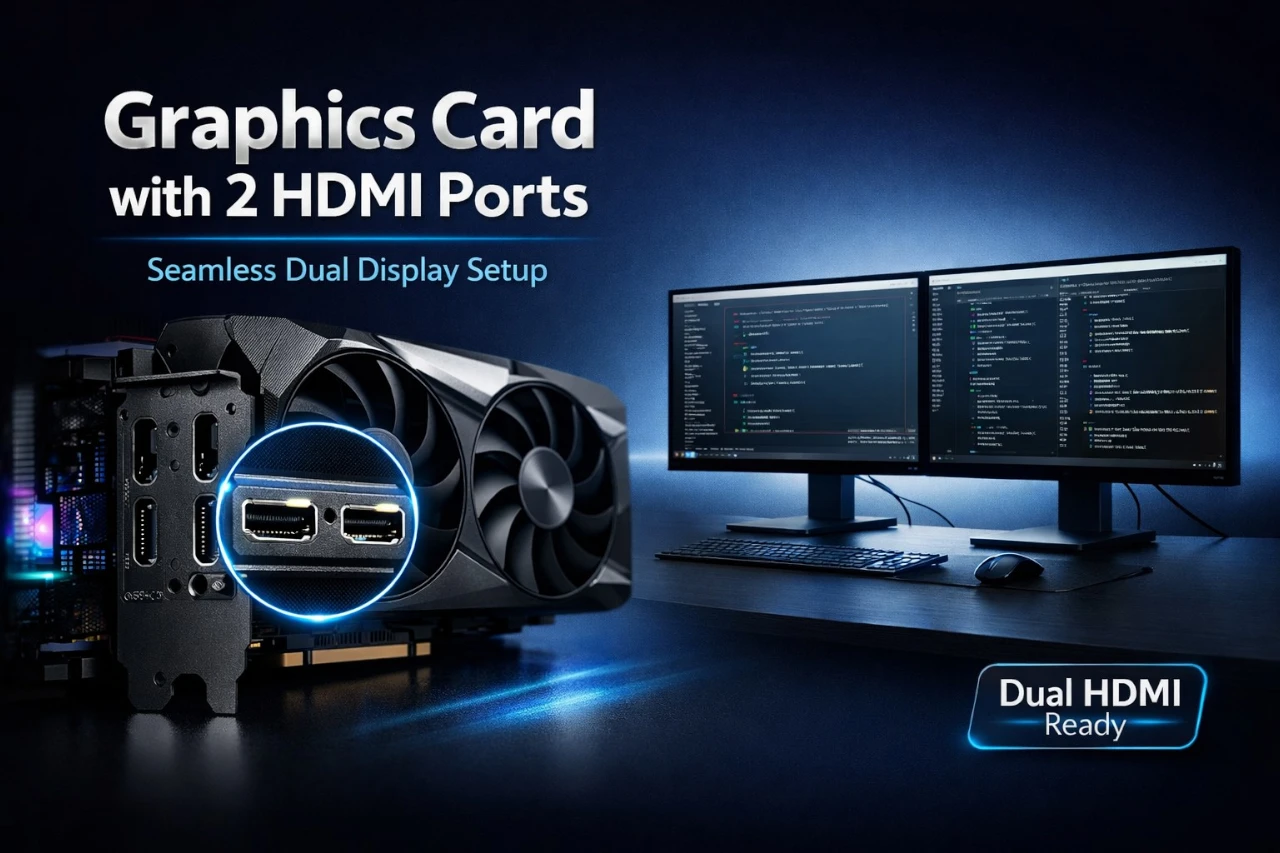
A graphics card controls how your computer displays images, video, and games. It sends visual data to your monitor and affects how sharp, smooth, and detailed everything looks. If you use more than one screen, the type and number of video ports on the card matter just as much as raw power.
A graphics card with two HDMI ports lets you connect two HDMI displays at the same time without adapters. This makes it easy to run dual monitors for work, gaming, or streaming using simple HDMI cables. Many modern monitors and TVs use HDMI, so having two matching ports keeps setup simple and clean.
When you shop for one, focus on the card’s performance level, HDMI version support, power needs, and physical size. You should also check your power supply wattage and case space before you buy. We reviewed and compared top models with two HDMI ports to find the ones that deliver strong performance and easy multi‑monitor setup.
Best Graphics Cards with 2 HDMI Ports
Below is our full list of the best graphics cards with 2 HDMI ports. We selected these options based on performance, reliability, and value for different budgets. Each card supports dual HDMI connections, making it easy to run multiple monitors or connect to TVs and other displays.
1. ASUS Dual RTX 5060 OC 8GB

We recommend this card for gamers who want strong 1440p performance and two HDMI ports in a compact, easy-to-fit design.
Pros
- Runs cool and quiet, even during long gaming sessions
- Compact size fits small and mid-size cases
- Smooth gameplay with DLSS support
Cons
- 8GB memory may limit some future titles
- Not ideal for heavy 4K gaming
- Requires a modern power supply for best results
| Preview | Product | Price | |
|---|---|---|---|

|
ASUS Dual GeForce RTX™ 5060 8GB GDDR7 OC Edition (PCIe 5.0, 8GB GDDR7, DLSS 4, HDMI 2.1b… |
$369.99 |
View on Amazon |
We installed this card in a mid-size case, and it fit without trouble. The 2.5-slot design left enough room for airflow. The dual fans stayed quiet while we played for hours. Even under load, we did not hear harsh fan noise.
Gameplay felt smooth in 1080p and 1440p. DLSS made a clear difference in supported games. Frame rates stayed steady, and visuals looked sharp on a dual HDMI setup. We connected two HDMI monitors without adapters, which made cable management simple.
The build feels solid. The shroud looks clean and sturdy. During testing, temperatures stayed under control, and the card did not throttle.
This card works best for gamers who want strong performance in a smaller build. It handles modern games well, but we would not pick it for high-end 4K settings. For most users upgrading from an older mid-range GPU, it delivers a clear boost.
2. ASUS TUF RTX 3080 Ti OC

We recommend this card for gamers who want strong 4K performance and two HDMI ports in a durable, well-cooled design.
Pros
- Runs cool and quiet even under heavy gaming
- Dual HDMI ports make multi-display setups simple
- Solid build quality with long-lasting fans
Cons
- Large and heavy, needs space in the case
- Uses a lot of power under load
- Higher cost than mid-range GPUs
| Preview | Product | Price | |
|---|---|---|---|

|
ASUS TUF Gaming NVIDIA GeForce RTX 3080 Ti OC Edition Graphics Card (PCIe 4.0, 12GB GDDR6X, HDMI… |
$2,058.90 |
View on Amazon |
We installed this card in our test rig and noticed the weight right away. It feels sturdy and well built. The metal shroud and firm backplate add confidence when mounting it.
During gameplay, it stayed quiet. The three fans pushed air smoothly, and we did not hear sharp or high-pitched noise. After long sessions, temperatures stayed steady, which helped the system feel stable.
We connected two HDMI monitors without adapters, and setup took minutes. That makes it a good pick for users who run dual TVs or HDMI gaming monitors. The card also handled high resolutions without stutter in demanding titles.
Power draw is high, so we paired it with a strong power supply. Make sure your case has room, because it takes up space and adds weight. Once installed, though, it delivered fast frame rates and smooth performance that felt consistent across games.
For buyers who want a high-end graphics card with two HDMI ports and solid cooling, this model meets those needs with reliable real-world results.
3. ASUS Prime RTX 5070 OC

We recommend this card for gamers who want strong 1440p performance and two HDMI ports in a compact, well-cooled design.
Pros
- Delivers smooth gameplay at 1440p with room for light 4K use
- Runs cool and quiet, even during long sessions
- Fits well in smaller cases without airflow issues
Cons
- Costs more than some mid-range options
- Feels heavy and may need extra support
- Large power draw under full load
| Preview | Product | Price | |
|---|---|---|---|

|
ASUS The SFF-Ready Prime GeForce RTX™ 5070 OC Edition Graphics Card, NVIDIA, Desktop (PCIe… |
$759.99
$699.99 |
View on Amazon |
After installing the ASUS Prime RTX 5070 OC, we noticed how clean and solid it feels. The 2.5-slot design made it easier to fit into a mid-size case than expected. We also liked having two HDMI ports, which made it simple to connect both a gaming monitor and a TV without adapters.
During testing, games at 1440p ran smooth on high and ultra settings. Frame rates stayed steady, and the card handled fast action without stutter. With frame generation on supported titles, motion looked fluid and responsive.
Cooling impressed us right away. The three fans pushed air efficiently, and the card stayed quiet during light gaming thanks to its zero-RPM mode. Under heavy load, we heard airflow but no sharp fan noise. The dual BIOS switch gave us the choice between quieter operation and higher performance.
We did notice the card has some weight. We recommend using a support bracket to protect the PCIe slot. Power use also climbs during demanding games, so pair it with a solid power supply.
Overall, we found the ASUS Prime RTX 5070 OC reliable, fast, and easy to live with for daily gaming and creative work.
4. ASUS TUF RTX 4080 Super OC

We recommend this card for high-end gaming and multi-monitor setups if you want strong 4K performance and two HDMI ports in one solid build.
Pros
- Delivers very smooth 4K gameplay with ray tracing on
- Runs cool and quiet under heavy load
- Two HDMI ports make dual-display setups simple
Cons
- Very large and heavy, needs plenty of case space
- High price compared to mid-range cards
- Power cable setup can feel bulky
| Preview | Product | Price | |
|---|---|---|---|

|
ASUS TUF Gaming NVIDIA GeForce RTX™ 4080 Super OC Edition Gaming Graphics Card (PCIe 4.0, 16GB… | $1,745.99 | View on Amazon |
We installed this card in a mid-tower case and noticed right away how large it is. It takes up serious space and feels heavy in hand. We suggest using the included support bracket to prevent sag.
Once powered on, performance stood out. Games at 1440p and 4K ran smoothly with high settings enabled. Frame rates stayed stable, even during long sessions. Ray tracing looked clean and detailed without major slowdowns.
Cooling impressed us during extended gaming. The fans stayed fairly quiet, and the card kept steady temperatures. The metal shroud feels strong and well built.
Dual HDMI ports made our setup easier. We connected two HDMI displays without adapters, which saved time and reduced cable clutter. If you run multiple monitors for gaming or work, this helps.
Power wiring requires care. The cable can press against the side panel in tighter cases. Measure your space before buying.
Overall, we found the ASUS TUF RTX 4080 Super OC reliable and very capable. It suits gamers who want strong performance now and room to grow into higher resolutions.
5. MSI RTX 4080 Gaming X Trio White

If we want strong 4K gaming performance and a clean white design from a trusted brand, this card is a solid buy.
Pros
- Runs very quiet even under heavy gaming loads
- Handles 1440p and 4K gaming with smooth frame rates
- Premium white design that stands out in a glass case
Cons
- Large and heavy, needs a roomy case
- High price compared to mid-range GPUs
- Only one HDMI port despite strong multi-display support
| Preview | Product | Price | |
|---|---|---|---|

|
msi Gaming GeForce RTX 4080 16GB GDRR6X 384-Bit HDMI/DP Nvlink Tri-Frozr 3 Ada Lovelace Architecture… | $1,985.00 | View on Amazon |
After installing this card, we noticed the size right away. It takes up a lot of space and feels heavy in hand. Make sure your case has room and solid support.
Once powered on, it stayed quiet. Even during long gaming sessions, the fans did not get loud. We played several demanding titles at 1440p and 4K, and gameplay felt smooth and stable.
Visual quality looked sharp and detailed. Ray tracing effects appeared clean, and fast action scenes stayed fluid. We also tested it with creative work, and rendering tasks finished faster than with older GPUs we used.
The white finish gives it a clean and modern look. In a white-themed build, it fits perfectly and looks polished through a side panel window.
We do wish it had two HDMI ports for easier dual HDMI monitor setups. It offers strong display support, but users who rely on multiple HDMI connections may need adapters.
Buying Guide
When we choose a graphics card with 2 HDMI ports, we start with our display needs. We should check the resolution and refresh rate of our monitors. The card must support both at the same time.
We also review the GPU performance level. For basic office work or media playback, an entry-level card works well. For gaming or design work, we need more processing power and higher memory.
Video memory (VRAM) matters. More VRAM helps with higher resolutions and detailed graphics. We should match VRAM size to how we plan to use the system.
| Feature | What We Should Check | Why It Matters |
|---|---|---|
| HDMI Version | 2.0 or 2.1 | Supports higher refresh rates and 4K output |
| VRAM Size | 4GB, 8GB, or more | Handles larger textures and multitasking |
| Power Use | Wattage rating | Ensures our power supply can handle it |
| Cooling Type | Single or dual fan | Affects noise and heat control |
| Size | Length and slot width | Must fit inside our case |
We need to confirm power supply compatibility. The card may require extra power connectors, and our system must support them.
Physical size also plays a role. Some cards take up two or more slots, so we measure our case space before buying.
By focusing on these factors, we can select a card that fits our setup and supports two HDMI displays without issues.