
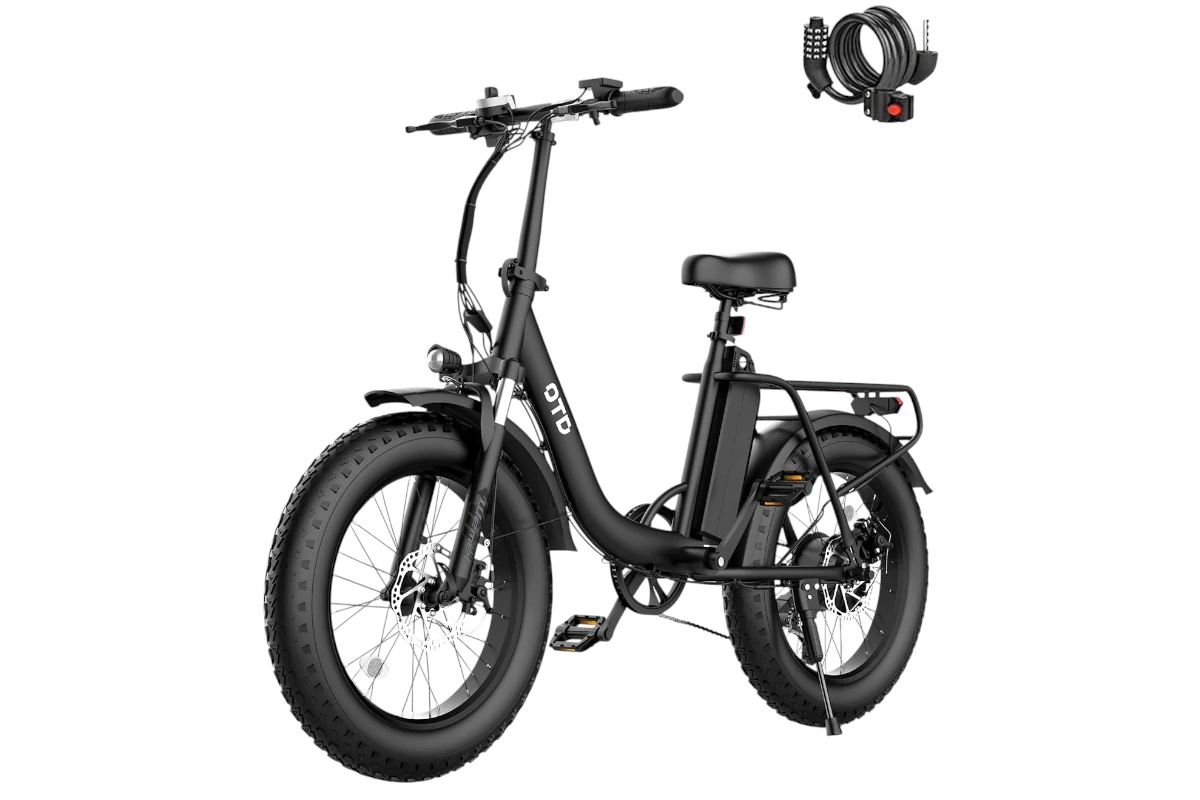
OTD DS2 Review: Great for Rough Streets, Heavy for Stairs
Comfortable and confidence-inspiring on bad pavement and mixed surfaces, but the fat-tire weight and drag matter if you carry or pedal unassisted.
Tested: local mixed-surface riding (pavement + dirt/grass). Rider: 5′11″ / 180 lb. Best fit for: casual cruising + light trails.
- Best for: riders who want a stable, step-through fat-tire cruiser for rough streets and curb-heavy routes.
- What you’ll like: cushy ride feel from the fat tires + easy throttle breaks when your legs want rest.
- Trade-off: heavy and draggy—apartment stairs and unassisted pedaling will feel like work.
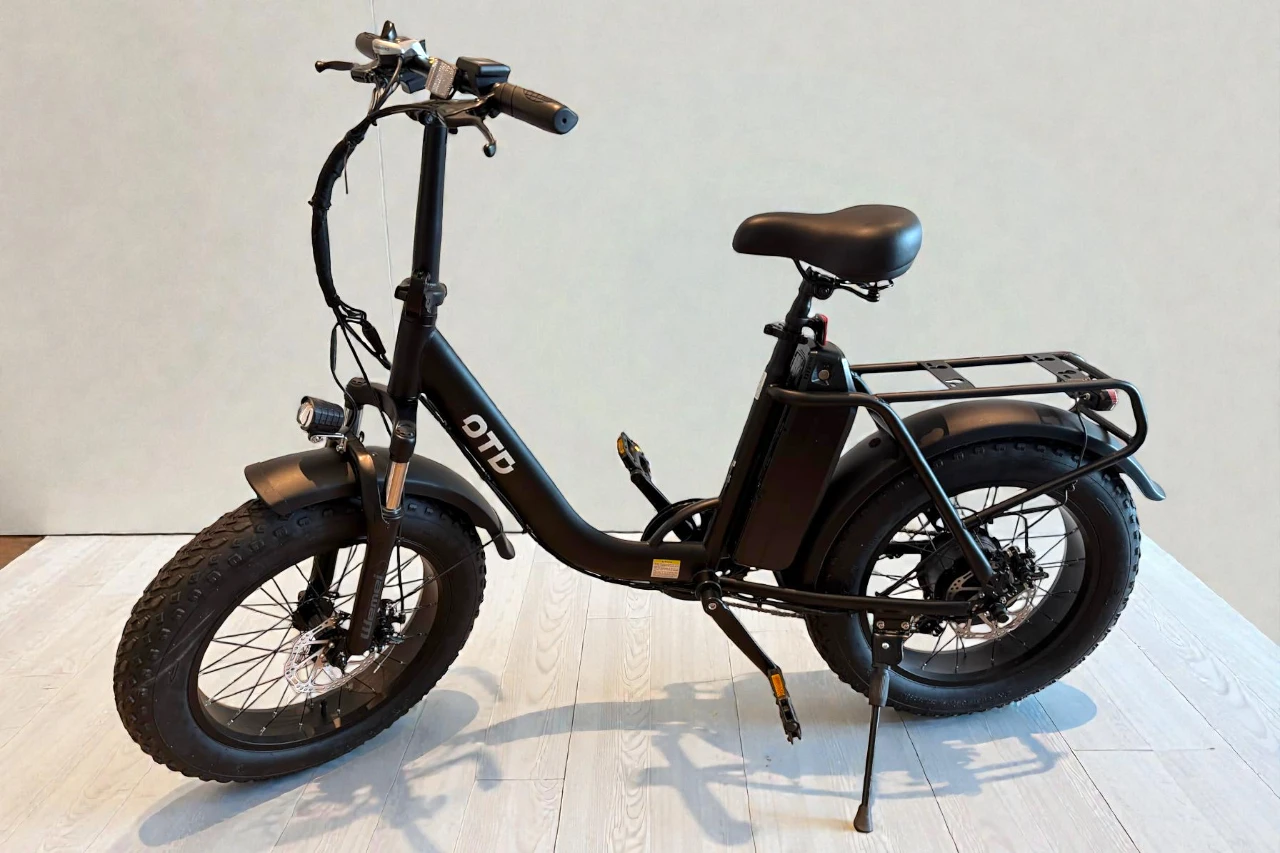
The OTD DS2 is a step-through, fat-tire e-bike built for casual riding on imperfect pavement, dirt paths, and the kind of neighborhood terrain where curbs, cracks, and short grass are part of the route. It’s not a “precision” e-bike—it’s more of a comfort-first, confidence-first cruiser.
I’m 5′11″ and about 180 lb, and the DS2 adjusted to fit me better than I expected for a budget-friendly fat-tire bike. I rode it locally on mixed surfaces (pavement, rough patches, and some off-road shortcuts), and it delivered the main thing people buy this style of e-bike for: stable, cushy rolling with easy power when you want a break.
That said, it comes with the usual trade-offs of this category—weight, fat-tire drag, and “good-enough” components that work fine for casual riding but shouldn’t be mistaken for premium parts.
Quick Verdict
One-sentence verdict: The OTD DS2 is a strong choice for casual riders who want a stable, comfy fat-tire step-through for rough roads and light trails, but it’s not ideal if you need a lighter bike, a more “bicycle-like” pedaling feel, or serious hill performance.
Best for:
- Riders who want comfort and stability over speed or sporty handling
- Mixed riding on rough pavement, hardpack dirt, grass, and curb-heavy neighborhoods
- Anyone who values a step-through frame + throttle option for lower-effort cruising
Not ideal for:
- Apartment/stairs living—this style of bike is heavy and awkward to carry
- Steep-hill commuters who need high torque + better gearing
- Riders who want a natural, responsive pedal feel (this category typically feels more “moped-like”)
Biggest strength: It smooths out bad surfaces surprisingly well, and the step-through fit worked nicely for my 5′11″ height.
Biggest trade-off: The fat-tire platform adds comfort, but it also adds weight and drag—so pedaling without assist isn’t enjoyable.
Scorecard
- Ride Feel: 7.6/10
- Power (Real Use): 7.4/10
- Range (Real Use): 7.3/10
- Comfort: 8.2/10
- Build & Serviceability: 6.8/10
- Value: 7.9/10
At a Glance
- Category: Step-through fat-tire cruiser / utility style
- Motor: Hub motor (750W peak)
- Battery: 48V 13Ah (624Wh) removable battery
- Claimed range: Up to 45 miles
- My realistic expectation: Often high-20s to mid-30s miles depending on assist/speed
- Top speed: Listed 20 mph
- Weight: Listed around 69 lb
- Drivetrain: Shimano 7-speed
- Brakes: Mechanical disc brakes
- Tires: 20″ x 4″ fat tires
- Best for: Comfort cruising on rough roads + occasional off-road shortcuts
Real-World Test Setup
- Rider: 5′11″, ~180 lb, casual utility riding style
- Terrain: Local streets (rough pavement, cracks), curb transitions, short grass, dirt/uneven paths
- Assist usage: Mostly pedal assist, throttle used when I wanted a break or to roll through awkward surfaces
- Speed behavior: Cruising pace rather than constant max speed
- Test duration: Multiple local rides (enough to judge fit, comfort, surface handling, and practical range feel)
- Notes that matter: My area doesn’t have many sidewalks, so I mixed surfaces constantly—this is where fat tires either shine or feel pointless. On the DS2, they genuinely helped.
What Is the OTD DS2?
In plain terms, the DS2 is a budget-friendly fat-tire e-bike aimed at riders who want comfort, stability, and simple controls without obsessing over performance metrics. The step-through frame makes it approachable, and the fat tires do the heavy lifting for ride comfort—especially when your routes include bad pavement and unpredictable surfaces.
It’s also clearly designed around practical basics: integrated lights, a simple LCD, a removable battery, and a straightforward “ride it like a relaxed cruiser” geometry.
Key Specs
| Spec | What’s listed / shown |
|---|---|
| Motor | Hub motor, 750W peak |
| Battery | 48V 13Ah = 624Wh, removable |
| Top speed | 20 mph |
| Range | Up to 45 miles |
| Tires | 20″ x 4″ fat tires |
| Drivetrain | Shimano 7-speed |
| Brakes | Front + rear disc brakes |
| Suspension | Front suspension fork, plus comfort-focused setup overall |
| Weight | ~69 lb |
| Payload | ~265 lb max |
| Display | LCD |
| Certification | Marketing shows UL 2849 badge; I can’t independently verify beyond the provided materials |
Who This Bike Is For
If you want a bike that feels stable, cushioned, and forgiving, the DS2 matches that goal. The step-through frame is easy to live with, the fat tires take the sting out of rough roads, and the throttle is useful when you want to rest your legs or keep momentum across awkward terrain (like soft patches or bumpy transitions).
I’d frame it as a good fit for:
- casual riders who prioritize comfort
- neighborhoods with bad pavement and lots of stop-and-go
- light off-road use where stability matters more than agility
Who Should Skip This Bike
Be blunt here—skipping the wrong bike saves money and frustration.
- Skip if you carry bikes up stairs or lift onto racks often → choose a lighter commuter e-bike with narrower tires.
- Skip if you ride steep hills daily → prioritize a higher-torque setup, better gearing, or a mid-drive style bike.
- Skip if you want a natural “analog bicycle” pedaling feel → look for a lighter bike with a torque sensor (fat tires + budget tuning usually won’t feel that way).
- Skip if you plan aggressive off-road riding → fat tires help, but trail riding needs stronger brakes, better suspension control, and more precise handling.
Real-World Performance
1) First Ride Impressions
The first thing I noticed was how confidence-inspiring it felt over rough surfaces. Fat tires can look gimmicky in product photos, but in real neighborhoods—with cracks, bumps, and curb cuts—they make the ride calmer.
The step-through frame also made it easy to mount and restart repeatedly, which matters more than people think when you’re doing errands or riding in stop-and-go traffic.
Quick surprise: It felt more “comfortable and planted” than “light and playful.” That’s a compliment for the intended use, but it also hints at the trade-off: you’re not buying this for nimble handling.
2) Power & Ride Feel
Starts (stop-and-go):
- Good at: Getting you rolling without drama, especially when you’re restarting a lot.
- Cost/boundary: The overall feel is more “powered cruiser” than athletic bike—great for relaxing, less great if you love lively pedaling.
Hills (short climbs vs longer pulls):
- Good at: Handling mild-to-moderate grades without making you stand and grind.
- Cost/boundary: On longer or steeper hills, this category can feel limited by gearing and overall torque tuning—if hills are your daily reality, you’ll want something more purpose-built.
Cruising (where it feels happiest):
- Good at: Comfortable cruising where the bike feels stable and unbothered by rough pavement.
- Cost/boundary: Fat tires add rolling resistance—so it’s not the kind of bike that “glides” efficiently if you reduce assist.
Pedaling beyond assist / battery off:
- Good at: Still rideable for short distances if you must.
- Cost/boundary: Realistically, you won’t want to pedal this unassisted very far. Weight + fat-tire drag makes it feel sluggish.
3) Speed & Control
For my riding, the sweet spot was “comfortable cruising” rather than chasing top speed. The bike’s stability works in its favor here—when the pavement gets rough, it doesn’t feel twitchy.
Throttle is the feature I appreciated most on mixed terrain. When I hit grass, dirt, or uneven patches and didn’t feel like pushing hard, using throttle to maintain momentum made the ride feel easier and smoother.
Where I’d be cautious: the more a bike encourages relaxed cruising, the more riders tend to treat it casually. This is still a heavy e-bike—leave extra stopping distance, especially on unfamiliar surfaces.
4) Range You Can Expect
The brand markets an “up to” range figure. In real riding, fat tires usually reduce efficiency compared to narrower commuter tires.
Here’s what I’d tell a friend based on how I rode it and what I experienced (I got 30+ miles on a charge with mixed use):
- Conservative: ~35–45 miles (low speeds, gentle routes, lighter assist, minimal throttle)
- Typical: ~28–35 miles (mixed surfaces, moderate assist, normal stops/starts)
- Aggressive: ~18–25 miles (higher speeds, more throttle, hills, heavier loads)
Top range killers on this bike: higher cruising speed, hills, and fat-tire pressure/drag.
Translate to real life: If you ride a 6-mile round trip a few times a week at moderate assist, you’re likely charging every few days—not every ride.
Comfort, Handling & Practicality
Comfort
This is where the DS2 earns its keep. The fat tires noticeably softened bumps, curb transitions, and rough patches—exactly the kind of “daily discomfort” that makes people stop riding.
Fit-wise, at 5′11″ I had no problem dialing it in. The bike felt appropriately sized, and the step-through frame made frequent stops easier.
My practical comfort tip: fat tires feel best when you don’t overinflate them. Too much pressure can make the ride harsher and reduce the whole point of the fat-tire setup.
Handling & Stability
At low speeds, it felt steady rather than twitchy, which helps when you’re maneuvering around obstacles or rolling through tight areas. At cruising speeds, it stayed planted over rough pavement.
The trade-off is that it doesn’t feel “flickable.” That’s normal for a heavier fat-tire e-bike, and it’s not a problem unless you expect sporty handling.
Brakes & Safety
Disc brakes are the right call for a heavy e-bike, but on budget builds, braking can feel more “adequate” than “excellent.” My advice: plan for a short bedding-in period and keep your expectations realistic—especially if you ride fast or carry extra weight.
Lighting being included is a plus for basic visibility, but if you regularly ride at night, I’d still consider upgrading to a brighter headlight and adding extra rear visibility.
On certifications: the product materials show a UL 2849 badge. I’m not independently verifying it here, but it’s still a positive sign if the specific unit you buy truly matches that certification.
Controls, Display & Riding Modes
The LCD gives you the basics you actually use: speed, battery, mileage, and assist level. The control layout felt straightforward, and I didn’t have any “why is this so confusing?” moments.
Three riding modes (pedal assist, throttle/pure electric behavior, and regular pedaling) is exactly what most casual riders want—simple choices, not app complexity.
Fit, Sizing & Adjustability
- My fit: At 5′11″, the bike adjusted comfortably and didn’t feel cramped.
- For shorter riders: Step-through helps a lot, but you still want to confirm you can get the seat low enough for confident stops.
- For taller riders: Make sure you have enough seatpost extension and that the cockpit doesn’t feel short for your arms/torso.
Simple tuning that actually helps:
- Set tire pressure for comfort (not max pressure).
- Adjust saddle angle and bar angle before judging comfort.
- After a few rides, re-check bolts—budget bikes often settle in.
Ownership Notes
Assembly took me about half an hour, and nothing about it felt intimidating. The usual “time sinks” are aligning the handlebars, confirming brakes are adjusted acceptably, and making sure the front wheel and pedals are properly installed and tightened.
First-week checklist (after 10–20 miles):
- Re-check axle/wheel security and quick-release tension (if applicable)
- Tighten stem/handlebar bolts
- Check brake caliper alignment and cable tension
- Confirm pedal tightness and crank area for any play
- Inspect tire pressure and look for early puncture debris
Service reality: fat-tire tubes/tires are common, but everything is heavier and more effort to work on. If you hate maintenance, budget for occasional shop help.
What’s Included in the Box
- E-bike + charger
- Battery keys (2)
- User manual
- Basic tools (Allen keys, wrench, screwdriver)
- Pedals, reflectors, display, headlight, kickstand (as listed)
Pros & Cons
Go Farther on Local Rides
Planning errands, weekend loops, or rough neighborhood roads? The OTD DS2’s big battery and fat tires make everyday rides feel easier and more forgiving.
Pros:
- Very confidence-inspiring on rough pavement—fat tires genuinely smooth out cracks and curb transitions
- Step-through frame is practical for frequent stops and casual riding
- Comfortable “cruiser” feel that suits neighborhoods and mixed surfaces
- Throttle is genuinely useful when you want a break or need steady momentum over uneven ground
- Fit worked well for me at 5′11″ with normal adjustments
- Solid value concept if your priority is comfort + simple utility
Cons:
- Heavy and bulky—storage, stairs, and car racks can be a hassle
- Fat tires add drag, so it’s not fun to pedal unassisted
- Braking performance on budget e-bikes is often “fine,” not premium—plan accordingly
- Not the best choice for sustained steep hills or riders who want a torque-sensor-like natural feel
- Long-term serviceability/support is harder to judge in this price tier—keep expectations realistic
Deal-Breakers & Annoyances
- If you have stairs: The weight/awkward carry is a real daily friction point.
- If you’re a steep-hill commuter: You may find it runs out of “easy power” sooner than you’d like on long climbs.
- If you want a light, bicycle-like ride: The fat-tire cruiser category feels more “powered” than “sporty.”
- If you rely on premium braking feel: Budget discs can require more adjustment and give less confident modulation than higher-end systems.
- If you expect published performance numbers to match real life: Treat acceleration/climb claims as marketing—ride feel matters more.
Comparisons
Compared to lighter commuter e-bikes with narrower tires, the DS2 wins on comfort over rough ground and casual stability—but loses on portability, pedaling efficiency, and “nimble” handling.
Compared to more expensive fat-tire bikes, the DS2 can still cover the core experience (comfort + stability + easy cruising), but you typically give up refinement—especially in braking feel, component polish, and long-term support confidence.
FAQ
Is the OTD DS2 good for hills?
For mild-to-moderate hills, yes. For long or steep climbs every day, I’d look at higher-torque options.
Is it comfortable for longer rides?
Yes—comfort is the point here. Fat tires help most on rough pavement and mixed surfaces.
Can shorter riders fit it?
Step-through helps a lot, but seat height and reach still matter. Make sure you can stop confidently with control.
Is the battery removable / easy to charge?
It’s listed as removable, which is helpful if you charge indoors.
How long does charging take?
The listing mentions about 6 hours. Real time can vary depending on charger and how empty the battery is.
What maintenance should I expect?
Regular basics: tire pressure, brake adjustment, chain care, and bolt checks—especially early on.
Is it safe / does it have verified certifications?
Marketing materials show a UL 2849 badge, but I’m not independently verifying the certification here. If this matters to you, confirm it for your exact model/unit.
What’s the first upgrade you’d make?
If you ride at night often, upgrade lighting/visibility first. If you ride fast, focus on brake tuning and pads.
Final Verdict – Should You Buy It?
Buy it if: You want a comfortable, stable step-through fat-tire e-bike for rough roads, casual cruising, and mixed-surface riding.
Skip it if: You need portability (stairs/racks), steep-hill performance, or a lighter, more natural pedaling feel.
Best use case: Neighborhood riding where pavement quality is unpredictable, plus occasional dirt/grass shortcuts.
Main compromise: Weight and fat-tire drag—great for comfort, not great for carrying or pedaling without assist.
Personal judgment: If I specifically wanted a budget-friendly comfort cruiser for rough streets and light off-road paths, I’d consider spending my own money on it. But if my daily life involved stairs or steep hills, I’d redirect my budget toward a lighter commuter or a more hill-capable drivetrain.
| Preview | Product | Price | |
|---|---|---|---|
![OTD Electric Bikes [with Password Lock],750W 20MPH Up to 45 Miles Electric Bicycles, 48V 624WH Removable Battery,20'*4.0' Fat Tire E-Bike,7-Speed(UL 2849)](https://www.featurelens.com/wp-content/plugins/aawp/public/image.php?url=YUhSMGNITTZMeTl0TG0xbFpHbGhMV0Z0WVhwdmJpNWpiMjB2YVcxaFoyVnpMMGt2TkRGNlIzbHlkMDlIUlV3dVgxTk1NVFl3WHk1cWNHYz18MTc3MTI4MTk1OA=)
|
OTD Electric Bikes [with Password Lock],750W 20MPH Up to 45 Miles Electric Bicycles, 48V 624WH… | $359.98 | View on Amazon |